
Russia's invasion of Ukraine in February 2022 disrupted Black Sea fertilizer logistics and raised risk premia across nitrogen, phosphate, and sulfur. USGS later noted 2022 world sulfur supplies were hampered by the conflict even as global output was roughly unchanged versus 2021. The MCS 2023 PDF is at https://pubs.usgs.gov/periodicals/mcs2023/mcs2023-sulfur.pdf.
World output about 81.4 to 82 million tonnes, Canada about 4.9 million, US about 8.6 million, is that unchanged production. Hampered supplies in USGS's language is logistics, credit, insurance, and origin risk, not a Claus outage. MCS 2024 still listed Russia at 10 percent and Kazakhstan at 9 percent of US elemental sulfur imports for 2019-22. Some of those tonnes became harder to book after 24 February.
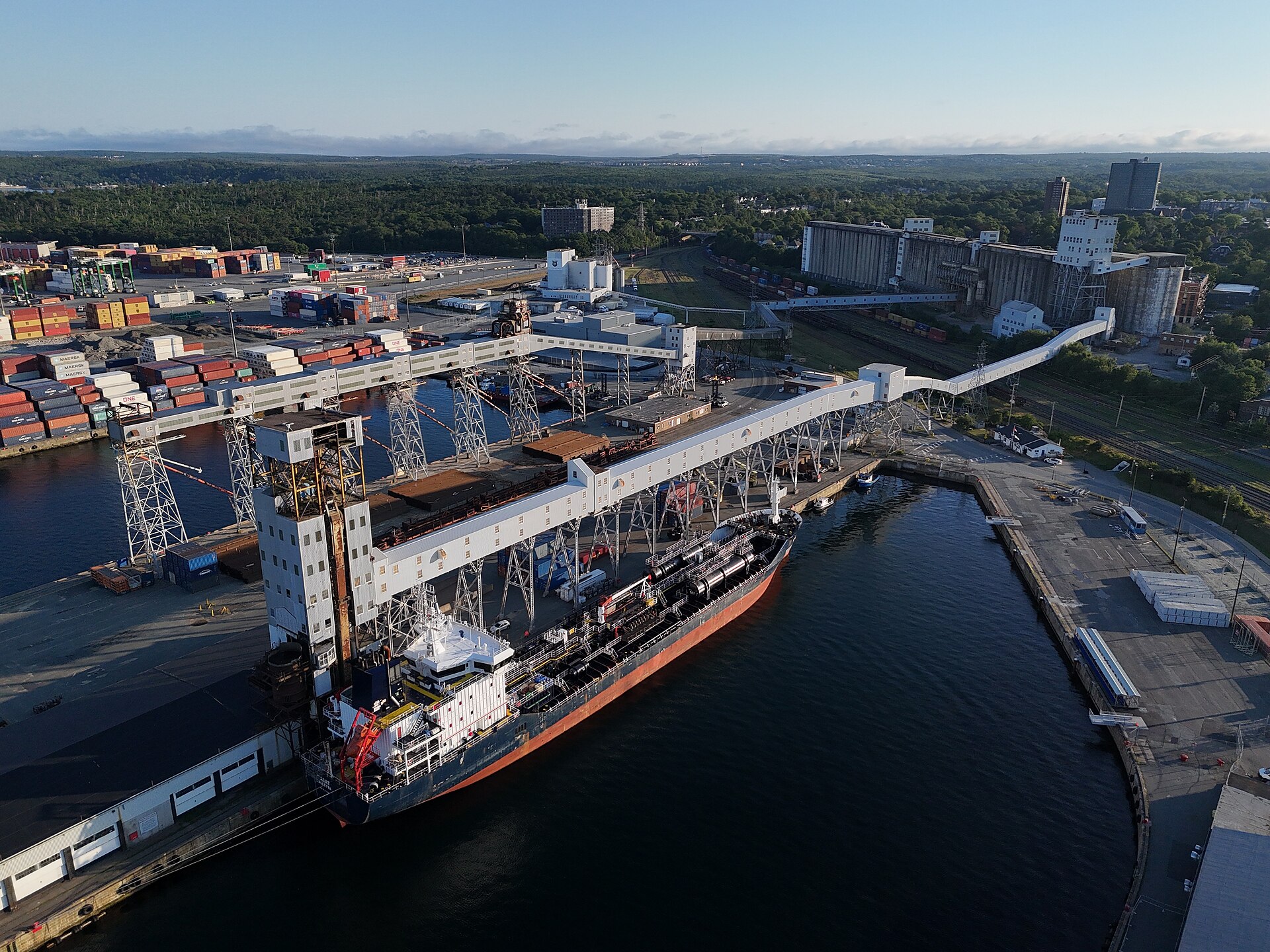
Alberta recovered sulfur still leaves mainly through Vancouver. Canadian Pacific solids do not transit the Black Sea. They still repriced because fertilizer is a globally traded chain, as TFI told USDA. Tampa from $282 at the 2022 open to $481 in early April is the molten rhyme. Vancouver from about $330-340 FOB in early March to $385-400 by late March, Keg River citing Fertecon, is the Pacific rhyme. War-risk premia and phosphate restocking arrived together. UNCERTAIN: the exact split in any single March week.
Nitrogen is the gas-linked product. Sulfur is the recovered byproduct. They moved together in February-April because phosphate plants buy both and because credit committees treat fertilizer cargo as one complex. Canadian forming plants do not produce ammonia. They still felt the complex.
Chinese phosphate inspections from October 2021 had already tightened DAP trade. The war added a second shock. July's Chinese quota would add a third. 2022 priced all three, then crashed when the third destroyed demand. February is the second shock's start date.
Kazakh sulfur later moving by rail via Russia to Ust-Luga is a 2023-24 corridor that runs through the same Russian logistics system this invasion placed under sanctions risk. 2022 is the risk premium. 2026 is the export ban. Two intensities, one geography.
Canadian Pacific labour risk briefly raised logistics concern for Canada-US sulfur rail before settlement, in first-quarter 2022 outlook notes. Inland movement is part of sulfur's delivered cost. War did not create that fact. It reminded marketers that logistics is the product.
Figures follow USGS. The February 2022 invasion is the geopolitical chapter under the $481 Tampa peak, not a substitute for the July Chinese quota as the crash's cause.