
Argus's late-2022 and early-2023 outlook expected elevated refinery throughputs and increased Canadian bitumen processing to boost North American sulfur output in 2023, promoting price stability after 2022's extreme volatility, though late-2023 Chinese softness reintroduced downside. The viewpoint is at https://www.argusmedia.com/en/news-and-insights/latest-market-news/2405506-viewpoint-sulfur-volatility-to-wane-as-supply-recovers.
Lost refining capacity since end-2019 still meant a full return to 2018 sulfur output was unlikely. US Gulf availability was expected to improve as domestic consumption moderated. That is stabilization, not a flood. USGS later put 2023 US production about unchanged near 8.6 million tonnes. Argus citing USGS put January-September just over 6 million, Gulf Coast 3.57 million up 3 percent. The outlook's direction held. The magnitude was modest.
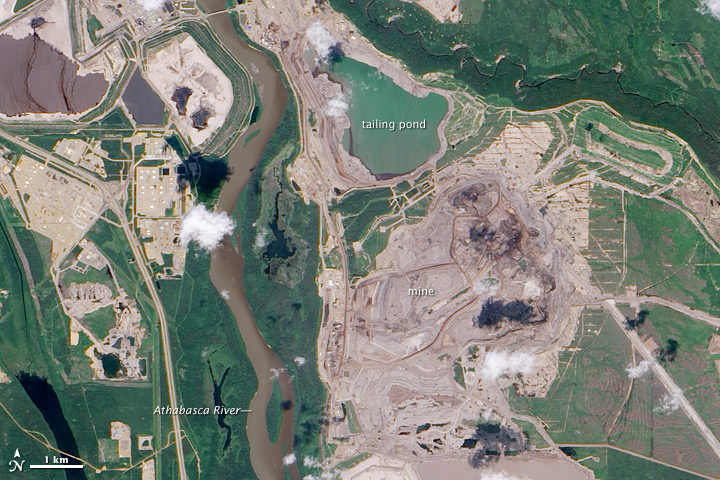
Alberta recovered sulfur still leaves mainly through Vancouver. AER via Argus later put January-October Alberta production at 3.78 million tonnes, up 11 percent, as bitumen and heavy sour crude bolstered oil-sands sulfur. That is the Canadian half of the Argus output call. VFPA 3.10 million tonnes, up 11 percent, is the harbour half. More recovery became more cargo, not only more pad, because forming and term offtake existed.
Price stability did not mean a flat $130 Tampa. USGS recorded $90 open, $130 mid-January, $55 mid-July, $102 fourth quarter. Volatility waned versus 2022's $481-to-$90 collapse. It did not vanish. Chinese softness in the fourth quarter, Vancouver $72 FOB, is the downside Argus said re-entered. The early-year output-recovery thesis and the late-year demand-softness thesis are both on the 2023 tape.
South Cheecham's mid-year start was the forming-capacity footnote in that Argus recovery viewpoint, a potential 5 to 10 percent Vancouver-linked export capacity uplift subject to demand. Demand in late 2023 was the constraint, not the priller's existence. Startup issues into 2024 delayed full use.
Mosaic's sinking utilization through 2022, expected to continue into 2023, freed Gulf sulfur for export as domestic phosphate runs stayed weak. Higher refinery sulfur plus weaker phosphate consumption is the Atlantic surplus recipe. Canadian oil-sands sulfur plus a growing Vancouver stem is the Pacific recipe. Together they damped 2022 scarcity psychology.
Nickel HPAL and IFA's still-below-2020 MAP and DAP are the demand side the output outlook had to meet. They met it at $55. That is stability in the sense Argus meant: no $481. It is also a remelt-off year for high-cost Alberta block.
Figures follow Argus. Licensed weekly grids are not restated. High refining and oil-sands throughput is the 2023 supply chapter.