
USGS Mineral Commodity Summaries 2024 import-source statistics for 2019-22 list Canada at 77 percent of US elemental sulfur imports, Russia 10 percent, Kazakhstan 9 percent. Total sulfur imports remained Canada-led, about 70 percent, underscoring the molten rail corridor's strategic weight even when Vancouver solid prices were soft. The PDF is at https://pubs.usgs.gov/periodicals/mcs2024/mcs2024-sulfur.pdf.
MCS 2026 later put Canada's share at 53 percent of US recovered elemental sulfur imports for 2021-24, with Mexico 7 percent, Iraq 6 percent, and Kazakhstan 6 percent. The 77 percent 2019-22 print and the 53 percent 2021-24 print are different windows. Both still have Canada first. Molten Canadian sulfur that rails south into US phosphate and industrial acid plants is that share's physical counterpart.
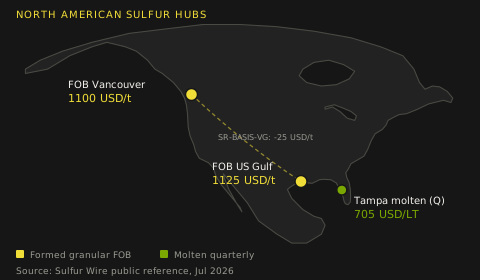
Alberta recovered sulfur still leaves mainly through Vancouver when it is formed for export. The US molten rail path is the other door. About 900,000 tonnes of Canadian liquid rail into the United States in 2024, Argus, and about 1.3 million tonnes molten south in the BC Insight 2023 narrative, are the tonne counts behind the USGS percentages. A 77 percent import share is not a Vancouver statistic. It is a rail statistic.
Russia at 10 percent and Kazakhstan at 9 percent in the 2019-22 elemental table are the CIS tonnes that later sanctions, the Astrakhan damage, and the 2026 Kazakh export suspension would remove. 2023 still had those origins in the rear-view. USGS later noted 2022 world sulfur supplies were hampered by the Ukraine conflict even as global output was roughly unchanged. The 2019-22 average still includes pre-war Russian tonnes.
Tampa opened 2023 near $90 per long ton and found $55 in mid-July, USGS. Soft US molten contracts are what Canadian rail was delivering into. A high import share at a low contract is affordability for Florida phosphate, not a tariff fight. Section 338 duties in August 2026 would still leave HS 2503 unnamed on the covered lists in open reporting. 2023 is the quiet corridor those later lists would be read against.
US 2023 production about unchanged near 8.6 million tonnes, MCS 2024, with elemental recovered about 8.0 million, meant domestic output did not displace the Canadian rail book. Mosaic's 2022 utilization cuts had reduced US sulfur consumption and freed some Gulf volume for export. Import share can stay high while Gulf solids leave. Two different tons.
Sulfuric acid imports in later MCS 2026 were led by Canada at 54 percent and Mexico at 22 percent. Acid and elemental are separate HS lines. Alberta forming plants and the Vancouver stem read both when US trade policy moves. 2023 MCS 2024 is the elemental table. It already framed Canada as the structural North American swing source.
Figures follow USGS MCS 2024. Licensed weekly grids are not restated. The 77 percent 2019-22 elemental share is why a Canada-US sulfur desk exists even in a $55 Tampa year.