
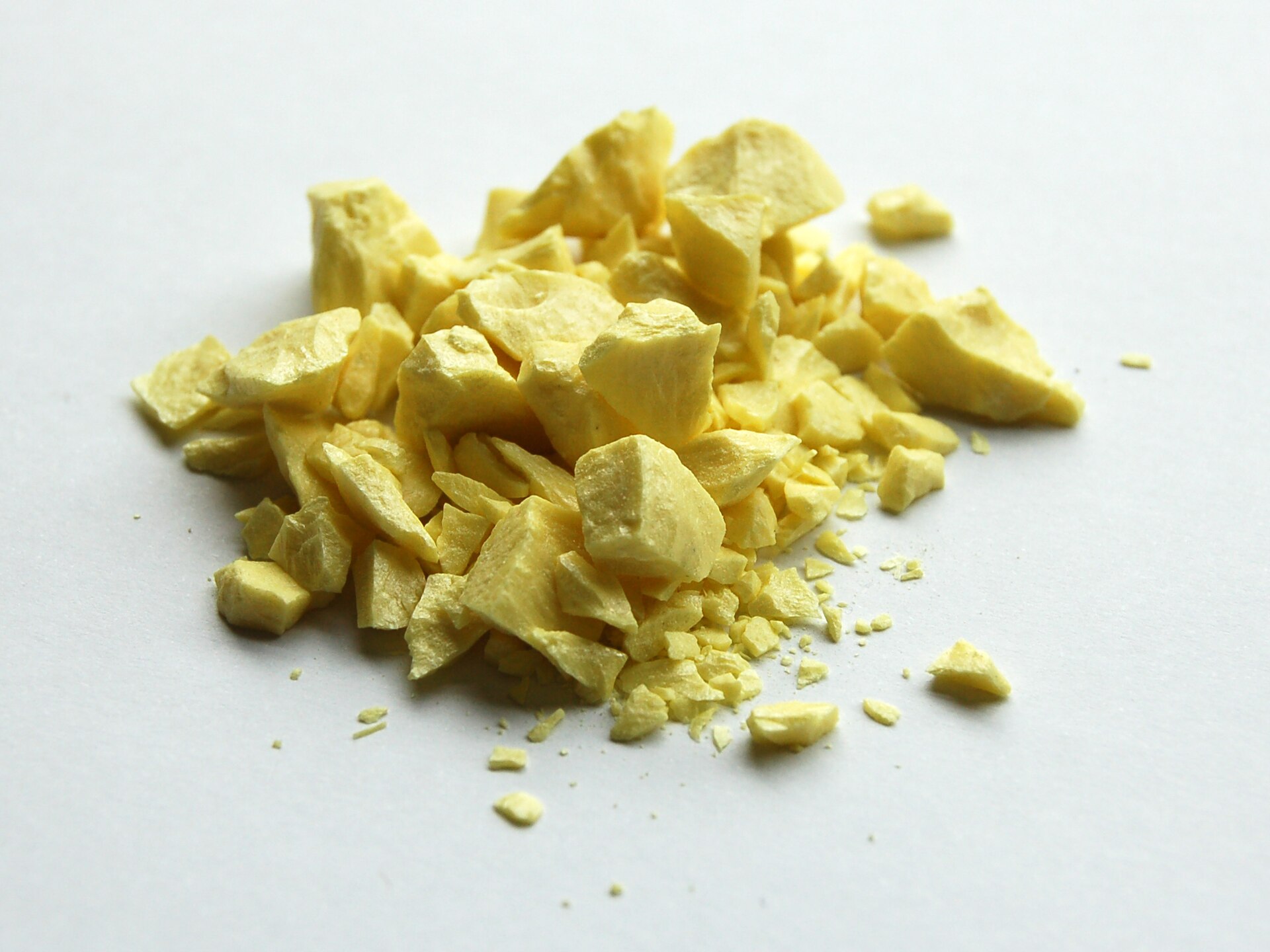
USGS Mineral Commodity Summaries 2025 lists world sulfur production about 85.8 million tonnes in 2023 and Canada about 4.98 million tonnes. China remained the largest producer near 19.4 million tonnes. Middle East exporters, Saudi Arabia, the UAE, Qatar, and Kuwait, continued to dominate seaborne trade volumes. The PDF is at https://pubs.usgs.gov/periodicals/mcs2025/mcs2025-sulfur.pdf.
MCS 2026 later revised 2024 world output to about 83.9 million tonnes and Canada to about 5.06 million tonnes. The 2023 Canada line near 4.98 million tonnes is the recovered book that Vancouver's 3.10 million tonne sulphur year and about 1.3 million tonnes of molten rail south, in the later BC Insight balance, had to live inside. Output is Claus and oil-sands recovery. Loadings are forming, rail, and terminals.
Alberta recovered sulfur still leaves mainly through the Vancouver stem. VFPA put Port of Vancouver sulphur at 3,103,912 tonnes in 2023, up 11 percent from 2.79 million in 2022. That Pacific solid slice is most of Canada's exportable surplus after domestic use near 0.6 million tonnes a year in the BC Insight 2023 narrative. The rest is molten into the United States.
US total sulfur production in 2023 was about unchanged from 2022 near 8.6 million tonnes in MCS 2024, elemental recovered about 8.0 million, shipments valued about $860 million. Average elemental unit value eased to about $100 per tonne from $150 in 2022. A flat US output year after the 2022 spike is surplus psychology, not a Claus collapse.
Tampa opened 2023 around $90 per long ton, rose to $130 in mid-January, then fell to $55 by mid-July, with the fourth quarter at $102, USGS MCS 2024. Volatile, far below the 2022 $481 peak. World 85.8 million tonnes against that Tampa path is a surplus year. China's import recovery to 8.8 million tonnes, IndexBox, at lower value, is the bid that still cleared Canadian and Gulf granules without restoring 2022 prices.
Argus, citing AER, later put Alberta January-October 2023 sulfur production at 3.78 million tonnes, up 386,000 tonnes or more than 11 percent from the same period in 2022, as bitumen and heavy sour crude bolstered oil-sands sulfur output toward record highs. More recovery does not automatically mean more remelt. Late-2023 Vancouver at $72 per tonne FOB midpoint on 14 December squeezed high-cost remelt economics.
Kazakhstan began lifting exports toward record levels into 2024 from Tengiz output and Kashagan stock drawdowns. Saudi Arabia added about 0.15 million tonnes a quarter from stock as storage neared capacity. Those draws are not Canadian remelt. They are regulatory and storage-driven tonnes into a surplus that USGS's 85.8 million tonne world already described.
Figures follow USGS MCS 2025. Licensed weekly assessment grids are not restated here. The 4.98 million tonne Canada print is the 2023 base for 2024's 5.06 million and 2025's remelt-and-load year.