
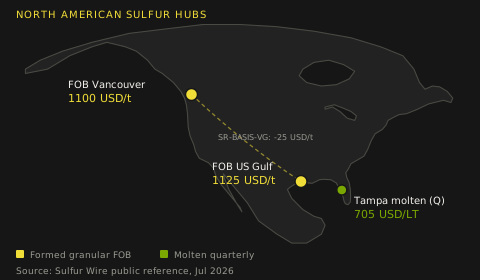
Argus noted threats of 25 percent tariffs on US-bound goods from early April encouraged Canadian suppliers to look for alternative markets accessible via Vancouver for some product historically railed as liquid into the United States, though logistics contracts meant any diversion would be gradual. The item is at https://www.argusmedia.com/en/news-and-insights/latest-market-news/2670825-vancouver-jan-feb-sulphur-exports-rise-by-17pc.
Molten rail south of the 49th parallel and formed solid through Vancouver are different books. A tariff threat on US-bound goods is a molten-rail risk. Forming, railing west, and loading dry bulk is the alternative, if contracts, tank cars, and forming slots allow. Gradual is the right word. Claus plants do not re-pipe in a week.
January-February Vancouver solid exports of 621,000 tonnes, up 17 percent, already showed the stem working before any April tariff date. China took 278,000 tonnes, Australia 108,000, Indonesia 59,000. Later January-August Brazil receipts of 122,842 tonnes, nearly threefold, are the Atlantic alternative Argus's diversion talk pointed toward. Reciprocal-tariff risk on US goods in Brazil was the later explicit link.
USGS put Canada at 53 percent of US elemental sulfur imports for 2021-24. A 25 percent tariff on that book would reprice Tampa against Canadian molten and leave Pacific solid as the relief valve for Alberta forming plants. The March 2025 item is talk. The August 2026 Section 338 covered list, energy and potash exempt, HS 2503 not named, is the later text. They are the same corridor watching different legal instruments.
Alberta recovered sulfur still leaves mainly through the Vancouver stem when it is formed. Inventory at the 2024 year-end AER-linked neighbourhood near 12 million tonnes, before the July 2025 11.66 million tonne print, was the block that could be remelted for either door. FOB that had averaged $78 in the prior-year January-July window was starting to triple. Diversion talk needs that FOB as well as tariff fear.
Tampa opened 2025 at $116 per long ton and would jump to $270 in early April, the same month the threatened tariff date sat. A Florida contract rising while a tariff threat hangs on Canadian molten is a two-sided US phosphate cost: higher Tampa, and risk to the 53 percent Canadian import share.
Logistics contracts, tank cars, and long-term molten commitments are why Argus said gradual. The desk will not treat a 17 percent January-February solid-export increase as proof of molten diversion. It will treat it as a stem already busy on China, Australia, and Indonesia, with Brazil still to come.
Figures follow Argus open news. Licensed weekly grids are not restated.