
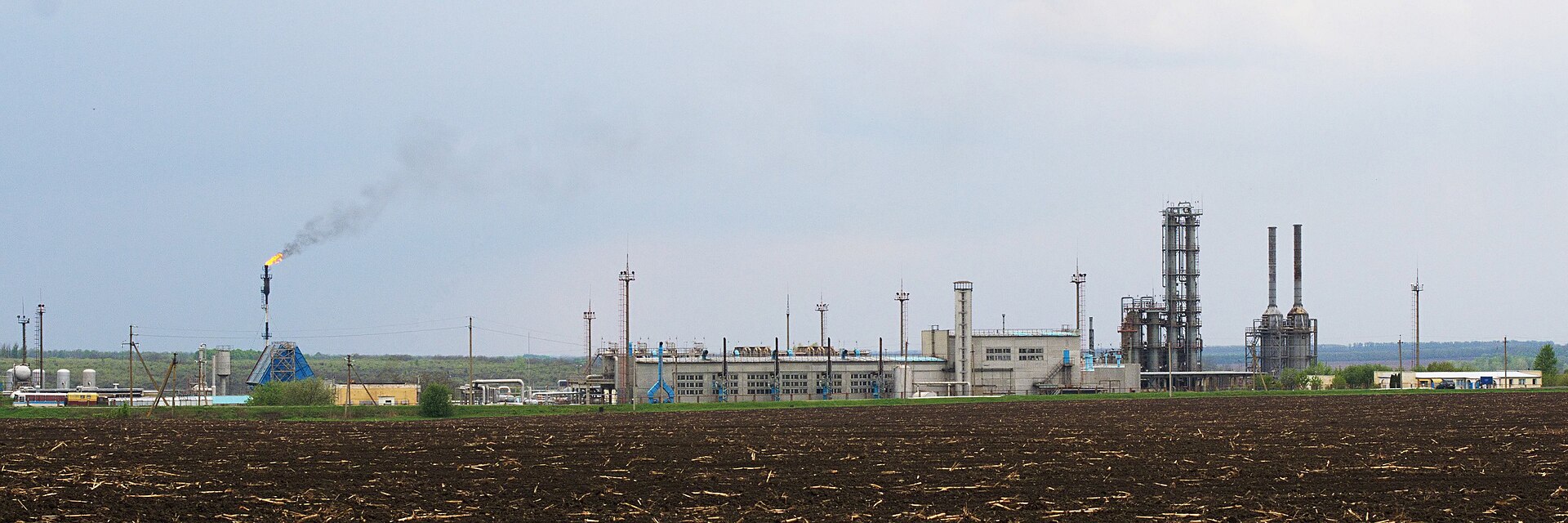
Industry reporting ties late-2025 Russian industrial sulfur export restrictions to damage at Gazprom's Astrakhan gas-processing complex. The ban later extended through 2026 and combined with Kazakh transit curbs to remove a major CIS seaborne supply path. BC Insight and CRU carried the recap in the 14 July 2026 sulphur market update.
Astrakhan is a sour-gas processing hub. Claus sulfur recovery stops when the gas plant stops. Damage is therefore a production print as well as the political trigger for an export ban. Tonnes that would have been recovered do not exist. Tonnes that were already recovered cannot leave the country under the ban.
Kazakhstan had used Russian ports for about 0.3 million tonnes a month. That transit still ran in November 2025. Roszheldor's 26 May 2026 order and Kazakhstan's 27 June export suspension are later. The 1 November desk item is the Russian origin story: a damaged complex and a ban, not yet a sealed CIS corridor.
Alberta recovered sulfur still leaves mainly through the Vancouver stem. Canadian 2025 exports of 4.25 million tonnes in SMM's later account, and VFPA's 3.51 million tonnes of sulphur, are the Pacific book that becomes more valuable when a CIS path is impaired. Remelt of Alberta block, 11.66 million tonnes provincial in July, is the inventory response.
Tampa at $310 per long ton in early October, USGS MCS 2026, was already the highest fourth quarter since the second quarter of 2022. A Russian ban into that tightness is a further bid, not the start of the 2025 rally. The rally began at $116 per long ton in January. Astrakhan is a late-year amplifier.
Morocco and Brazil, later named as key Kazakh-through-Russia destinations, are the phosphate buyers who will feel a CIS close most directly. OCP and Mosaic-Brazil curtailments in 2026 are the demand response. November 2025 is the supply-path warning.
World production in USGS MCS 2026 was 84 million tonnes, essentially unchanged. Russian restrictions do not show up as a world Claus collapse in that annual table. They show up as missing seaborne tonnes. Tradeable surplus, not nameplate, is the 2025-26 file.
The ban's later food-security framing in Decree No. 785 does not erase the Astrakhan damage origin. Both belong on the file. The desk will not treat a gas-plant incident as a sulfur-price conspiracy. It will treat it as a recovered-sulfur outage plus a trade ban.
Figures follow BC Insight and CRU industry reporting. Licensed weekly grids are not restated.