
USGS import-source statistics for 2021-24 show Canada provided 53 percent of US recovered elemental sulfur imports, with Mexico 7 percent, Iraq 6 percent, and Kazakhstan 6 percent. Sulfuric acid imports were led by Canada at 54 percent and Mexico at 22 percent. Net import reliance for sulfur was estimated at 14 percent of apparent US consumption in 2025. Mineral Commodity Summaries 2026 is at https://pubs.usgs.gov/periodicals/mcs2026/mcs2026-sulfur.pdf.
The summary was posted in February 2026, days before Kpler dated Hormuz closed to commercial dry bulk. Iraq's 6 percent is the conflict-exposed slice inside the US elemental import table. Kazakhstan's 6 percent is the CIS slice that Roszheldor and the June export suspension would later take off the water. Canada's 53 percent is the North American slice that remains.
Apparent US consumption in 2025 was 9.1 million tonnes. Fourteen percent net import reliance is about 1.3 million tonnes net. Elemental imports in 2025e were 2.0 million tonnes against 1.8 million tonnes of exports in the salient statistics. Canada at 53 percent of elemental imports is the first foreign supplier even in a country that still produces 7.6 million tonnes of recovered elemental sulfur.
Molten rail from Alberta into US phosphate and industrial plants is the physical counterpart of that 53 percent. Formed sulfur through Vancouver is a different book that can also land in the United States, as VFPA's 2025 US destination line of 302,000 tonnes, up 191 percent, showed. USGS import shares do not split molten versus solid. The desk does.
Acid at 54 percent Canadian is the other HS book. June 2026 Canadian sulphuric acid exports, in SMM's later customs note, rose 101 percent month on month to 123,140 tonnes, mostly to the United States. That pulse sits on this structural share. Mexico at 22 percent of acid imports is the smelter-acid neighbour.
TFI's March brief put US conflict-exposed sulfur at 10-20 percent of domestic supply. Iraq plus other Gulf origins inside that 10-20 percent are why Tampa rerates when Hormuz closes even though Canada is 53 percent of imports. The US produces most of what it burns. It still needs the import margin, and part of that margin was Iraqi.
Alberta recovered sulfur still leaves mainly through the Vancouver stem when it is formed. The 53 percent US import share is why the August Section 338 tariff watch on HS 2503 is a sulfur-desk file even when the covered list names wine and hockey sticks. A later listing would reprice this 53 percent. Energy, potash, and critical minerals exempt, and HS 2503 not named, is the 24 August working text.
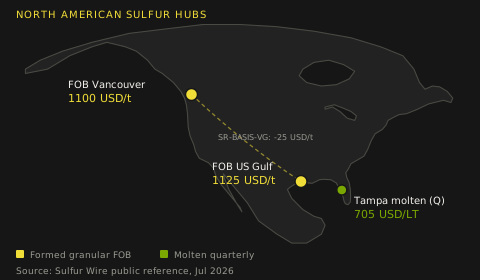
Tampa Q3 2026 at $705 per long ton (Argus, https://www.argusmedia.com/en/news-and-insights/latest-market-news/2851577-tampa-3q-liquid-sulphur-price-hits-record-705-lt) is the contract that prices US phosphate against this import structure. Canadian molten watches Tampa. Canadian solid watches Vancouver FOB. Both are in MCS 2026's Canada line even though the survey does not name those hubs.
Kazakhstan at 6 percent will not hold as a 2026 US import share if Order No. 1363 stays in force. Iraq at 6 percent will not hold if Hormuz dry bulk stays impaired. Canada's 53 percent is the share that can rise if those two fall. That is the swing-supplier math in a US import table.
Figures follow USGS MCS 2026. Licensed weekly grids are not restated.