
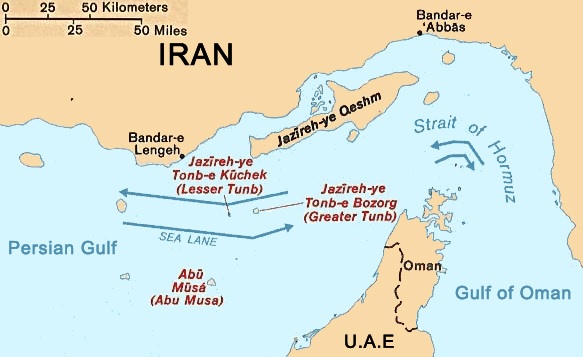
The Fertilizer Institute's March 2026 conflict brief states that high-risk Gulf exporters, Saudi Arabia, Bahrain, UAE, Kuwait, and Qatar, accounted for about 41 percent of global sulfur exports in 2025, with Iran adding about 4 percent. Combined with at-risk nearby origins, nearly 50 percent of global sulfur trade is tied to Strait of Hormuz exposure. The PDF is at https://www.tfi.org/wp-content/uploads/2026/03/Fertilizer-and-the-Middle-East-Conflict-2.pdf.
US sulfur import reliance on conflict-exposed supply is estimated at 10-20 percent of domestic supply. That is the US-centric line in a brief written for Washington. USGS MCS 2026 put net import reliance at 14 percent of apparent US consumption and Canada at 53 percent of elemental imports for 2021-24. Most US import tons are Canadian, not Gulf. The 10-20 percent is the conflict-exposed slice of domestic supply, not of imports.
Kpler dated Hormuz closed to commercial dry bulk on 28 February. The TFI brief is the US phosphate industry's first-week map of that closure. BC Insight's 23 March Dire Straits note put about 45 percent of 39 million tonnes of international sulfur on the same Strait. The two documents agree on the order of magnitude and differ on whether they count country export shares or seaborne tonnes.
Alberta recovered sulfur still leaves mainly through the Vancouver stem. A US phosphate industry that is 10-20 percent exposed to conflict-origin sulfur is 80-90 percent exposed to North American recovered sulfur, much of it Canadian. That is why Tampa molten and Vancouver FOB both reprice when Hormuz closes, and why the August tariff watch on HS 2503 matters to the same TFI members.
Rosenbusch's later 6 August interview, written up on 18 August, is this brief after a summer of plant cuts: four Mosaic units curtailed, Q3 molten at $705 per long ton, a request to treat sulfur as a bottleneck alongside nitrogen and potash. The March PDF is the exposure math. The August interview is the damage report.
Tampa Q3 at $705 per long ton (Argus, https://www.argusmedia.com/en/news-and-insights/latest-market-news/2851577-tampa-3q-liquid-sulphur-price-hits-record-705-lt) is the contract those TFI members settled. US Gulf solids at $1,100-1,150 FOB are the export alternative some Gulf refiners took. Domestic phosphate and export solid split inside the same 10-20 percent exposure.
Iran's 4 percent is named separately because Iranian sulfur is a different sanctions and insurance book from Saudi, UAE, Qatari, Kuwaiti, and Bahraini tonnes. Adding it to 41 percent is how TFI reaches the nearly 50 percent headline. CRU's later more-than-45 percent of seaborne trade is consistent without needing that split.
Canada as swing supplier, in SMM's H1 review, is the non-exposed origin TFI members can still bid. VFPA 3.51 million tonnes in 2025 and SMM's 5.22 million tonne 2026 annualized pace are the volumes behind that bid. They do not cover 45 percent of 39 million tonnes. They cover a margin.
Figures follow the TFI March 2026 brief. Named math is TFI's. Licensed weekly grids are not restated.