
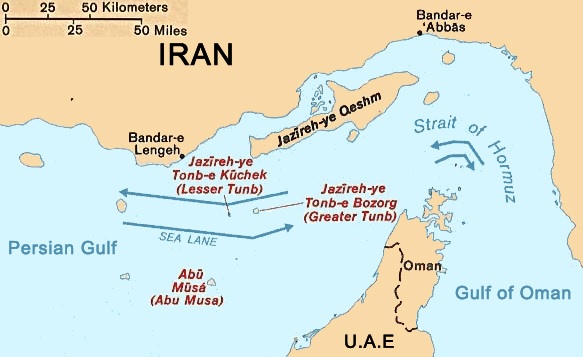
BC Insight notes that around 45 percent of the roughly 39 million tonnes of sulfur transported internationally each year must traverse the Strait of Hormuz. The 23 March Dire Straits note is at https://www.bcinsight.crugroup.com/2026/03/23/dire-straits/. Pre-conflict tightness, from the Russian export ban and a Tengizchevroil outage, had already lifted prices toward 2008 levels.
Hormuz force majeures and production cuts in Bahrain, Kuwait, Qatar, and Saudi Arabia then spiked Brazil to $560-590 per tonne CFR and the Mediterranean to $580-590 per tonne CFR in March reporting. Those CFR bands are the first public delivered prints of the closure. They are not yet the $1,100 FOB neighbourhood of June and July. They are the break from the $500 pre-conflict FOB world.
Kpler, in open trade analytics cited in the first-quarter Outlook, dated the Strait closed to commercial dry bulk traffic on 28 February 2026. SMM and other open reports described stranded loaded sulfur in the Gulf on the order of 0.8-1.0 million tonnes and sharp drops in Middle East-China vessel counts. Dire Straits is the CRU and BC Insight version of that week.
TFI's March conflict brief put high-risk Gulf exporters at about 41 percent of global sulfur exports in 2025, with Iran adding about 4 percent, and nearly 50 percent of global trade tied to Hormuz exposure. The 45 percent of 39 million tonnes seaborne in Dire Straits is the same Strait counted as tonnes rather than as country export shares.
Alberta recovered sulfur still leaves mainly through the Vancouver stem. A 45 percent seaborne exposure is why Vancouver FOB, in SMM's later recounting, rose from about $492 per tonne early year toward $680-720 in that spring commentary, and later toward $825-950 by April in the H1 review. Rail and forming saturation limited how many incremental tonnes Canada could offer in the first weeks.
Brazil at $560-590 per tonne CFR in March is an Atlantic delivered idea. US Gulf solids would later print $1,100-1,150 FOB in July Argus open news (https://www.argusmedia.com/en/news-and-insights/latest-market-news/2851577-tampa-3q-liquid-sulphur-price-hits-record-705-lt). The March Brazil CFR is the first step. The July Gulf FOB is the later step. Both are Hormuz translations.
Production cuts named in Bahrain, Kuwait, Qatar, and Saudi Arabia are origin damage, not only a lane closure. CRU's July update later put production loss around 2.3 million tonnes and regional operating rates at 60-70 percent. Dire Straits is the start of that production-loss file.
Tengizchevroil outage and the Russian ban are the pre-conflict tightness. Kazakhstan's later May rail halt and June export suspension would close the CIS relief valve that March still treated as impaired rather than shut. The 23 March piece should be read as the opening shock, not the full 2026 list.
Phosphate plants that buy seaborne sulfur, OCP, Mosaic's import-exposed units, Chinese DAP and MAP, Indian tenders, faced a 45 percent corridor failure in a single week. Byproduct inelasticity meant prices could not summon new Claus plants within the quarter. They could summon remelt, diversion, and demand destruction.
Figures follow the 23 March BC Insight Dire Straits note. Licensed weekly grids are not restated.