
BC Insight estimates Canada produced about 4.7 million tonnes of sulfur in 2025, sixth globally, and exported about 4.57 million tonnes, third behind the UAE and Saudi Arabia. Oil sands contributed about 3.0 million tonnes, or 63 percent of Canadian output. The 23 March note is at https://www.bcinsight.crugroup.com/2026/03/23/oil-sands-sulphur/.
High prices drove inventory declines through 2025, with about 1.5 million tonnes of Canadian blocked sulfur expected to be remelted and sold across 2025-2030 as additional remelt capacity commissions by end-2026. Remelt is the only Canadian volume that sulfur price can summon on a multi-year calendar. Claus recovery still tracks bitumen and sour-gas throughput.
Argus, citing Alberta Energy Regulator data, put provincial sulfur inventories at 11.66 million tonnes in July 2025, down 377,000 tonnes year on year and the lowest since May 2019. That AER-linked print is the stock under BC Insight's remelt narrative. Syncrude-area blocks have historically held most of the Canadian pile, with Acuity and CRU-linked commentary later putting Syncrude just over 9.9 million tonnes at end-November 2025, the first sub-10 million tonne facility print since 2019.
Export chain cost is often cited above $150 per tonne for remelt, rail, forming, and terminal. Draws require supportive FOB levels. USGS MCS 2026 later put Tampa climbing through 2025 from $116 per long ton toward $310 in early October. CRU described Vancouver FOB averaging $238 per tonne in January-July 2025, triple 2024's $78, and ending the year near $485-495. Those 2025 prices are what started the remelt cycle this March note is describing.
USGS MCS 2026 lists Canada all-forms production at 5.0 million tonnes in 2025e after 5.06 million tonnes in 2024. BC Insight's 4.7 million tonne elemental estimate and USGS's 5.0 million tonne all-forms line are different books. Both still put Canada in the first rank of exporters. VFPA's 2025 Vancouver sulphur total of 3,507,428 tonnes is the port slice.
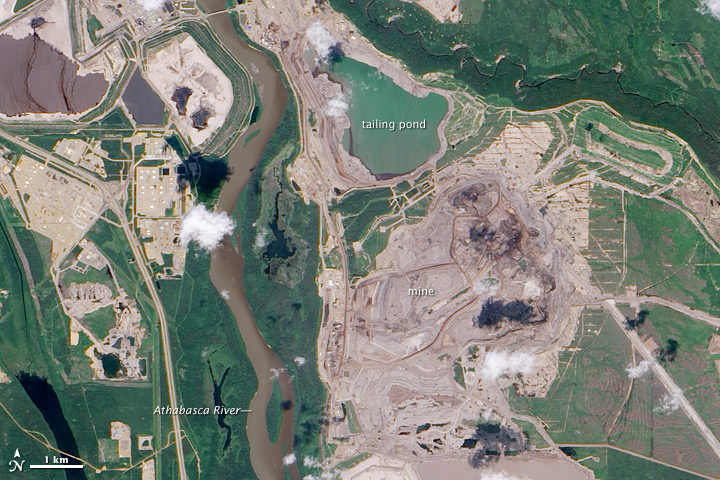
Capacity in the same BC Insight note is nearly 3 million tonnes a year in the oil-sands and upgrader belt: about 2.2 million near Fort McMurray (Suncor, Syncrude, CNRL Horizon) and about 700,000 around Edmonton (Shell Scotford about 580,000; Redwater about 130,000). June wildfire alerts near Lac la Biche in-situ sites sat next to that capacity list. Rainfall held the line.
Alberta recovered sulfur still leaves mainly through the Vancouver stem. A remelt cycle of 1.5 million tonnes over 2025-2030 is about 250,000 tonnes a year if linear, enough to matter at the margin and not enough to replace a 1 million tonne a month Hormuz hole. Swing supplier, in the later SMM usage, is this remelt plus this 4.57 million tonne export base.
The 23 March date is two weeks after Kpler dated Hormuz closed to commercial dry bulk on 28 February. The oil-sands note is a Canadian supply primer published into that shock. It is not yet the $1,100 FOB summer. It is the inventory and capacity map the summer will use.
Tampa Q3 2026 at $705 per long ton (Argus, https://www.argusmedia.com/en/news-and-insights/latest-market-news/2851577-tampa-3q-liquid-sulphur-price-hits-record-705-lt) came later. The March remelt thesis assumed high prices would continue. They did.
Figures follow BC Insight and the named AER and USGS prints. Licensed weekly grids are not redistributed.