
BC Insight notes 2025 dependence on Middle East sulfur at 76 percent for Indonesia, 84 percent for India, and 93 percent for southern Africa. The 22 May piece on fertilizer policies and sulphur markets is at https://www.bcinsight.crugroup.com/2026/05/22/the-impact-of-fertilizer-policies-on-sulphur-markets/. Policy and geopolitical shocks therefore dominate sulfur and phosphate price discovery over seasonal fertilizer fundamentals.
When Hormuz flows impair, buyers cannot always solve shortages by paying up because cargo availability itself is rationed. A 93 percent southern African dependence is not a bid that can switch to Vancouver in a week. It is a bid that waits, cuts acid, or pays whatever residual tonne appears. Indonesia at 76 percent has more Pacific optionality. India at 84 percent sits between.
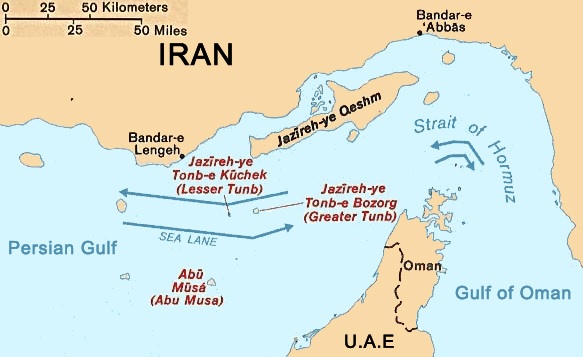
TFI's March brief put high-risk Gulf exporters at about 41 percent of global sulfur exports in 2025, with Iran adding about 4 percent, and nearly 50 percent of global trade tied to Hormuz. CRU's buyer-level dependence table is the demand-side version of that supply share. The same Strait that loads 45 percent of seaborne sulfur also feeds three regions that cannot easily substitute.
Alberta recovered sulfur still leaves mainly through the Vancouver stem. Indonesia is the buyer in this table that Vancouver can reach on a Pacific voyage. SMM's later June Canadian destination list put Indonesia first at 198,612 tonnes. Southern Africa is the buyer that US Gulf unusual Q2 cargoes, in the July Argus item, tried to reach via East Africa copper-belt fixtures.
India's 84 percent Middle East dependence is a tender market. SMM's mid-May commentary treated India tender clearing levels as a possible reset for Asia CFR anchors. A buyer that concentrated 84 percent of 2025 imports on Gulf origins is also the buyer whose 2026 tenders, if they clear at four-digit CFR, reprice everyone else.
China is not in this 76-93 percent trio because China has a more diversified origin mix, even though Gulf-4 was still about 35 percent of 2025 imports in SMM's later H1 review. China's 2026 story is import collapse, to 2.26 million tonnes in the first half, not origin concentration. These three buyers' story is origin concentration meeting a closed Strait.
Phosphate policy, the other half of the BC Insight title, includes China's MAP and DAP export halt from mid-March and Russia's food-security framing of its sulfur export ban. Those policies move sulfur as much as a planting calendar does. The May 22 piece is a warning not to read 2026 as a normal seasonal fertilizer year.
Tampa Q3 molten later settled at $705 per long ton (Argus, https://www.argusmedia.com/en/news-and-insights/latest-market-news/2851577-tampa-3q-liquid-sulphur-price-hits-record-705-lt). That is the US phosphate translation. It is not an Indian or southern African CFR. The connection is acid: the same missing Gulf tonne that starves a 93 percent-dependent importer also rerates Florida molten.
Nickel Industries' late-June ENC acid-plant startup in Sulawesi adds a non-phosphate Indonesian bid on top of the 76 percent Middle East dependence. HPAL and phosphate can ration the same scarce sulfur. Paying up does not always win if the vessel is not there.
Figures follow the 22 May BC Insight and CRU note. Licensed weekly grids are not redistributed.