
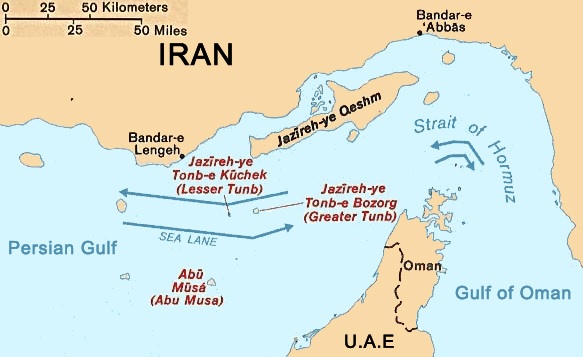
CRU estimates more than 0.5 million tonnes of sulfur is loaded and stranded inside the Strait of Hormuz, with onshore Gulf inventory thought to exceed 1.0 million tonnes and regional production at 60-70 percent of pre-conflict rates. The 14 July BC Insight update is at https://www.bcinsight.crugroup.com/2026/07/14/sulphur-market-update/.
Even with de-escalation signals, bringing exports back above 1 million tonnes a month may take until August-September 2026 because of vessel capacity bottlenecks and restart risk, including a fatal explosion at Qatar's Barzan facility during restart. Stranded loaded vessels are not the same as idle plants. They occupy ships that cannot pick up the next cargo.
Onshore stock above 1.0 million tonnes is sulfur that has been recovered and formed, or is sitting as molten, behind a closed lane. It is not a 2026 production collapse of the full 2.3 million tonne loss CRU also cited. Some of that loss is plants that cut or went offline. Some is tonnes that exist and cannot sail.
S&P Global reporting via Hellenic Shipping News stressed that fresh Gulf loadings lagged any transit reopening because early movements cleared stranded vessels rather than restored production. A 40-tanker crude evening in late August would not, on that logic, clear the sulfur queue. Dry-bulk sulfur and crude tankers are different lists.
Alberta recovered sulfur still leaves mainly through the Vancouver stem. A slow Hormuz restart keeps Canada in the swing-supplier role SMM quantified on a 5.22 million tonne annualized 2026 pace after a 4.25 million tonne 2025 print. VFPA's 3.51 million tonne 2025 Vancouver sulphur line is the port half of that role.
Tampa Q3 molten at $705 per long ton delivered (Argus, 13 July, https://www.argusmedia.com/en/news-and-insights/latest-market-news/2851577-tampa-3q-liquid-sulphur-price-hits-record-705-lt) and US Gulf spot solids at $1,100-1,150 per tonne FOB are the Atlantic prices of a stranded-Gulf market. Those prints ease only if the 1 million tonne a month restoration CRU treated as a working view actually prints.
Qatar's Barzan explosion is a named restart failure. Ras Laffan and other Gulf industrial cities are where recovered sulfur from sour-gas and LNG trains becomes cargo. A fatal incident during restart is why CRU's August-September timeline carried restart risk, not only mine-clearance risk.
Russia's ban through 31 December 2026 and Kazakhstan's 27 June export suspension mean a Hormuz restart would still leave CIS tonnes missing. The stranded 0.5 million tonnes plus onshore 1.0 million tonnes are Gulf tonnes. They do not reopen Tengiz or Russian Baltic loaders.
The Alberta desk's 30-day watch is therefore Gulf dry-bulk loadings above 1 million tonnes a month, not crude transits and not de-escalation headlines. Until that loading print appears, Vancouver stem tightness and remelt draws remain the North American base case.
UNCERTAIN: the month when Gulf export rates again exceed 1 million tonnes. CRU suggested August-September as a working view. Figures follow that 14 July update.