
A US measure imposing an additional 50 percent tariff on certain Canadian goods took effect at 12:01 a.m. Eastern Time on 22 August. Prime Minister Mark Carney suspended trade negotiations with the United States and announced equivalent retaliatory tariffs while the US tariff remains in force. Shanghai Metals Market carried a public headline on the same day.
President Trump said USMCA talks with Canada were progressing. The public items available to the desk offered no sulfur-specific carve-out in those remarks. Open trade context is Canadian elemental sulfur and sulphuric acid exports to the United States. Alberta forming plants and the Vancouver stem will read later list text for Harmonized System 2503.
Canada remains the dominant US import source for recovered sulfur. USGS Mineral Commodity Summaries 2026 put Canada's share of US recovered elemental sulfur imports at 53 percent for 2021-24. Sulfuric acid imports were led by Canada at 54 percent. Net import reliance for sulfur was estimated at 14 percent of apparent US consumption in 2025.
The 24 August AP, NBC, and USTR reporting later described the covered list as a narrow slice of about $20 billion, with energy, potash, fish, and critical minerals exempt, and elemental sulfur not named. That later text is the working list as of the third calendar day. The 22 August effective-time story is the start of the watch, not the last word on HS 2503.
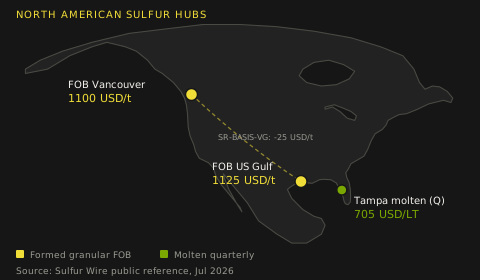
Molten sulfur that rails from Alberta into US phosphate and industrial plants is the import book that would feel a HS 2503 listing first. Formed sulfur that leaves Vancouver for China, Australia, Indonesia, and other Pacific destinations is the export book that would absorb diverted tonnes if the US molten door narrowed. Those are two different North American answers to the same tariff risk.
The measure landed on a market already carrying a Hormuz sulfur hole. TFI said more than half of globally traded sulfur normally transits the Strait and that commercial shipments had been near-zero since the Iran conflict. Russia extended its industrial sulfur export ban through 31 December 2026. Kazakhstan suspended sulfur exports from 27 June.
Itafos Conda's May index switch from Vancouver to Tampa, reported 9 August, shows how Western acid buyers have already been choosing between those two North American prints. A tariff that stays off sulfur leaves that choice as a basis decision. A tariff that later names HS 2503 would turn it into a border decision.
Ottawa's 8 September retaliation calendar is the next dated event. Carney's 22 August announcement put equivalent tariffs in force for as long as the US measure remains. Steel, dairy, appliances, agricultural equipment, pulp and paper, and electronics appeared in the 24 August open list of Canadian targets. Sulfur was not among them in that reporting.
The desk will not treat a USMCA-talks remark as a sulfur exemption. It will treat the covered-list text, the 8 September calendar, and USGS import shares as the file. Alberta inventory and Vancouver loadings continue on the Hormuz-era pace until those documents change.
Open trade context only. This item restates the public 22 August tariff effective-time account. It is not a licensed PRA weekly assessment.