
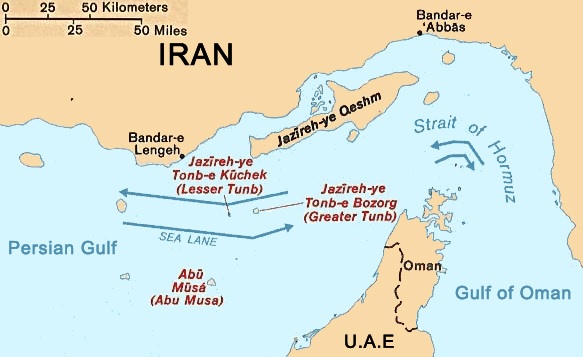
US media citing three US officials reported that on the evening of 21 August about 40 oil tankers passed through the southern channel of the Strait of Hormuz, moving roughly 16 million barrels of crude. Shanghai Metals Market carried the public headline, citing Axios. The passage is a crude-lane print. It is not a sulfur loading print.
Sulfur seaborne through Hormuz is a separate cargo book. The Fertilizer Institute, via Fertilizer Daily on 18 August, still described commercial sulfur shipments as near-zero since the Iran conflict, with more than half of globally traded sulfur normally transiting the Strait. CRU's mid-July update put Middle East monthly sulfur exports down more than 1.0 million tonnes a month since March and production loss near 2.3 million tonnes.
Crude tankers and dry-bulk sulfur do not share the same charter list, the same terminals, or the same insurance treatment. A 40-tanker crude evening does not clear the more than 0.5 million tonnes of sulfur CRU said was loaded and stranded inside the Strait as of mid-July, nor the more than 1.0 million tonnes of onshore Gulf sulfur stock CRU thought was sitting behind those vessels.
S&P Global reporting via Hellenic Shipping News said earlier that fresh Gulf sulfur loadings lagged any transit reopening because early movements cleared stranded vessels rather than restored production. A fatal explosion at Qatar's Barzan facility during restart was part of that restart-risk account. Regional production was described at 60-70 percent of pre-conflict rates.
Alberta recovered sulfur still leaves mainly through the Vancouver stem. Middle East sulfur tonnes remain on the slow-restart path SMM and CRU laid out: mine clearance, stranded vessels, and damaged Gulf production. A crude-lane print on 21 August does not change that path until dry-bulk sulfur fixtures and Gulf forming plants show up in the same week.
Port of Vancouver put 2025 sulphur at 3.51 million tonnes. SMM's H1 review annualized 2026 Canadian sulfur exports near 5.22 million tonnes, with Alberta and British Columbia more than 95 percent of the national account. That Pacific pace exists because Hormuz sulfur is not yet back at the more than 1 million tonnes a month CRU treated as a working restoration view for August-September.
Tampa Q3 molten at $705 per long ton delivered, from Argus open news at https://www.argusmedia.com/en/news-and-insights/latest-market-news/2851577-tampa-3q-liquid-sulphur-price-hits-record-705-lt, is the US phosphate contract that rerated on the same shock. US Gulf spot solids were cited in that cycle at $1,100-1,150 per tonne FOB. Those Atlantic prints stay elevated while Middle East dry bulk stays impaired, whether or not crude tankers move on a given evening.
The 21 August tanker count is therefore a monitoring baseline, not a sulfur all-clear. Named US officials, via Axios and the SMM headline, spoke about oil. They did not, in the public item the desk has, speak about formed sulfur, Claus plants, or phosphate acid. The Alberta desk will treat sulfur seaborne as impaired until Gulf dry-bulk loadings, not crude transits, print a recovery.
UNCERTAIN: desk confidence on this item is medium. The tanker count follows the cited US officials. Sulfur seaborne status follows TFI, CRU, and SMM public accounts, not the crude-lane print.