
The US additional 50 percent tariff on about $20 billion of Canadian goods remained in force on 26 August, the fifth calendar day after the 22 August 12:01 a.m. ET effective time. Open reporting from the Associated Press and the Office of the United States Trade Representative continues to describe the measure as covering a narrow slice of Canadian exports while exempting energy, potash, fish, and critical minerals.
Elemental sulfur, Harmonized System 2503, is still not named on the covered lists. Canada remains the dominant US import source for recovered sulfur. USGS Mineral Commodity Summaries 2026 import-source tables for 2021-24 show Canada at 53 percent of US elemental sulfur imports, with Mexico at 7 percent, Iraq at 6 percent, and Kazakhstan at 6 percent.
Prime Minister Mark Carney's retaliatory tariffs remain scheduled for 8 September, concentrated in steel, dairy, appliances, agricultural equipment, pulp and paper, and electronics. The AP account from 22 August is at https://apnews.com/article/canada-us-trade-tariffs-trump-857ef76b20a766e370d70176135b678e. That reporting still does not name sulfur. The desk treats HS 2503 as watching, not listed.
Molten Canadian sulfur that rails south into US phosphate and industrial acid plants is a different book from formed tonnes that leave Vancouver as dry bulk. A tariff that stays off HS 2503 leaves the molten rail path open. A later listing would reprice US Gulf domestic liquid against Canadian molten and would leave Pacific solid exports as the relief valve for Alberta forming plants.
USGS MCS 2026 estimated US net import reliance for sulfur at 14 percent of apparent consumption in 2025, with apparent consumption at 9.1 million tonnes. Sulfuric acid imports in the same summary were led by Canada at 54 percent and Mexico at 22 percent. Those shares are why Alberta forming plants and the Vancouver stem read USTR list text even when wine and hockey sticks dominate the political copy.
The fifth-day read is continuity, not resolution. Brazil's Sinprifert subsidy push on 26 August and Hormuz's MoU expiration on 17 August are the active supply shocks. Section 338 is a bilateral trade file that could still intersect sulfur if list text changes before or after Ottawa's 8 September retaliation.
Itafos said in second-quarter remarks that Conda's long-term sulfuric acid supply from Rio Tinto Kennecott, about 60 percent of Conda sulfur needs, was amended in May so pricing moved off the Vancouver sulfur index onto the Tampa index. That Western US acid plant is priced against Florida molten, not against a HS 2503 import of Canadian formed sulfur on the public remarks.
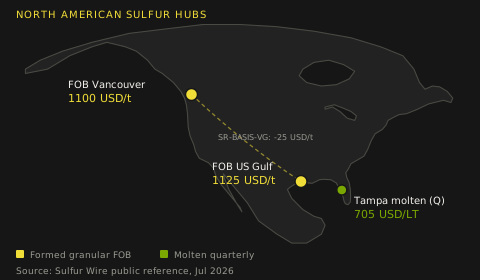
Tampa Q3 molten settled at $705 per long ton delivered in Argus open news on 13 July. Vancouver FOB industry estimates in SMM's first-half review ran from about $500 per tonne in January toward $825-950 per tonne by April. Neither print is a licensed weekly grid restated here. Both sit on the same North American map that USTR's covered list currently leaves sulfur off.
SMM's 21 August customs note put June 2026 Canadian elemental sulfur exports at 527,305 tonnes, with Indonesia and the United States leading destinations. VFPA's 2025 Vancouver sulphur total was 3,507,428 metric tonnes. Alberta Energy Regulator inventory draws through 2025 are the physical book behind those export prints.
Alberta recovered sulfur still leaves mainly through the Vancouver stem when formed for export. The US molten rail path is the other door. Fifth-day reporting still shows both doors open as a matter of tariff text. The 8 September Ottawa calendar is the next dated event on this file.
Open trade context only. This item restates AP and USTR reporting plus USGS import shares. It is not a licensed PRA weekly assessment.