
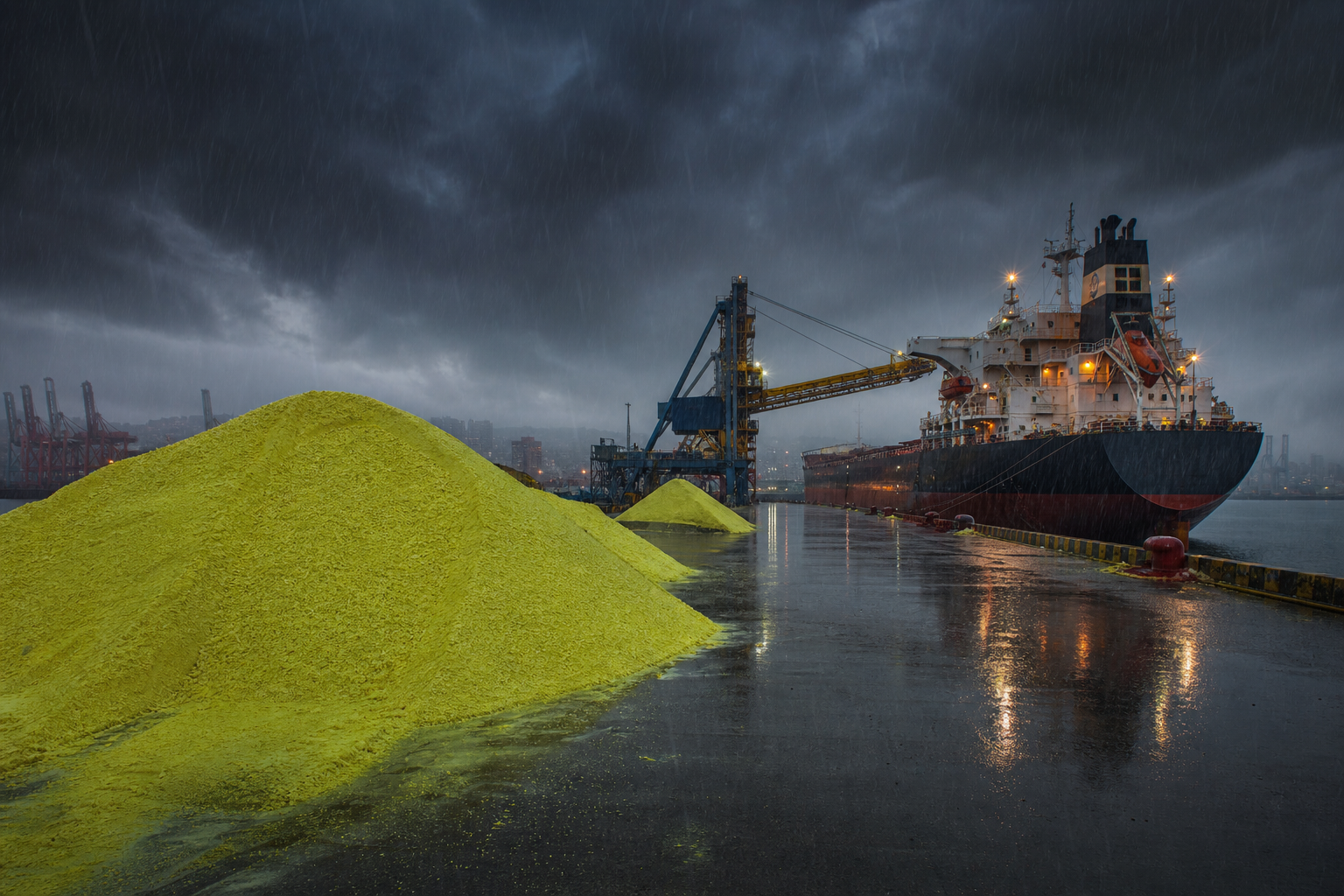
Chinese domestic ex-works sulphur prices fell sharply on August 31, according to Business Upturn, pulling to CNY 7,400 to 7,600 per tonne from CNY 8,470 to 8,950.
The move is roughly 10 to 17 percent depending on which endpoints are compared, and about 14 percent at the midpoints of the two ranges.
Paradeep Phosphates and Coromandel International, two listed Indian phosphatic fertiliser producers with large sulphur and acid requirements, moved into equity focus as the input cost eased.
Sulphur sits at the start of the phosphatic chain: burned to sulphuric acid, then used to process rock phosphate into phosphoric acid for diammonium phosphate and NPK grades.
That makes sulphur one of the larger variable input costs for a phosphatic producer, alongside rock phosphate and ammonia, so a spot decline reads through to downstream tonne economics rather than a single product line.
The caveats are familiar after months of volatility. Chinese ex-works quotes are not Indian landed costs. Freight, currency, and contract timing shape what a producer actually pays.
Inventory already held at older prices also delays margin relief. Coromandel's Q1 FY27 material costs rose to Rs 4,615 crore from Rs 3,567 crore a year earlier in its July 23 results, showing how long high feedstock can sit on the books.
India's nutrient-based subsidy regime and retail pricing sit between raw material moves and producer margins, so a spot sulphur dip does not automatically convert to higher EBITDA per tonne.
The immediate question is whether the correction holds or proves a short-lived dip. Sustained lower Chinese prices would ease pressure on phosphatic run rates that farmdoc and Environment+Energy Leader linked to Vancouver spot above $1,000 per ton in recent weeks.
For the Vancouver stem, a Chinese domestic easing does not directly cut FOB Pacific quotes, but it signals demand destruction and inventory digestion on the world's largest import market.
Alberta recovered sulfur has been the swing Pacific supply while Middle East seaborne stays impaired. Any cooling in Chinese buying appetite changes vessel nomination math at Port Moody even when Canadian loadings stay tariff-free.
Desk read: August 31 is the first open headline of a Chinese ex-works correction after the Hormuz-driven spike. Watch whether Pacific FOB follows with a lag or holds as Canada keeps clearing block inventory into export channels.