
Shanghai Metals Market's public June 2026 trade account put Canadian elemental sulfur exports at 527,305 metric tonnes on September 1 reporting.
The volume was down 15.43 percent month on month and 8.62 percent year on year in the SMM breakdown.
Indonesia took 198,612 tonnes, the United States 158,031 tonnes, Chile 54,672 tonnes, Guinea 41,272 tonnes, and China 32,730 tonnes among the listed destinations.
Canadian sulfur imports were 1,035 tonnes in the same month, mostly from the United States, a reminder that cross-border molten and solid flows run both ways even when Canada is a net exporter.
The same SMM release showed sulfuric acid exports at 123,140 tonnes, up 101 percent month on month, with the United States the main destination and a minimal amount to Morocco.
Sulfuric acid imports were 11,160 tonnes, down 66 percent month on month, with the United States supplying 11,080 tonnes of the total.
June is the latest open customs-style breakdown available for Alberta and British Columbia recovery tonnes clearing Pacific and cross-border channels.
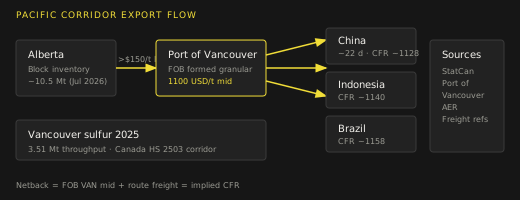
VFPA's 2025 annual print put Port of Vancouver sulphur at 3.5 million tonnes, up 5 percent year on year, with destinations including Brazil, China, and Indonesia in open port reporting.
The June export pace below the 2025 annual average is consistent with seasonal nomination patterns and the post-Hormuz demand spike that pulled more tonnes into Pacific stems earlier in 2026.
Alberta remains the dominant production province, with roughly four million tonnes per year of recovered sulfur from sour gas processing and oil sands upgrading.
Heartland Sulphur, Keyera, and Enersul forming lines feed rail to Port Moody and other tidewater outlets that show up in the Indonesia and China destination columns.
Desk read: 527,305 tonnes in June is a hard open number for the Vancouver stem and cross-border book. Indonesia and the US together account for more than two thirds of the month's elemental sulfur exports in the SMM account.