
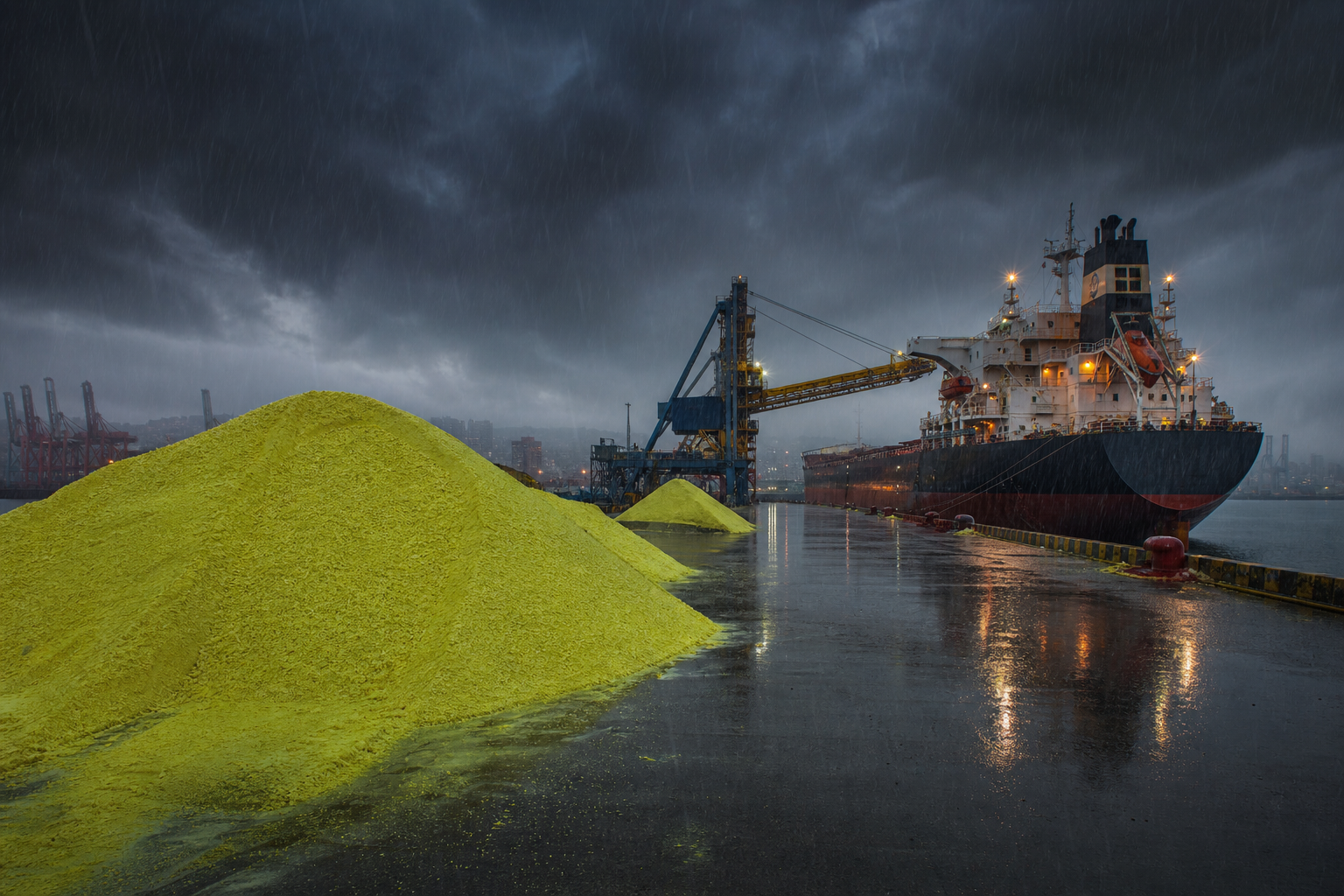
Chinese market reporting on September 2 put imported granular sulfur at the Yangtze at 7,600 yuan per tonne, up 50 yuan or 0.66 percent from September 1.
Oilchem's September 3 morning note said spot cargoes were harder to find at port, lifting prices even as downstream buyers slowed bids after earlier restocking.
The move partially reverses the September 1 correction that had pulled Zhenjiang mainstream granular to 7,500 yuan with a 7,300 yuan low trade, nearly 40 percent below the year's high in open telegraph coverage.
Shandong liquid sulfur auctions cleared at 7,500 to 7,653 yuan per tonne on September 2, with refinery output described as lower and overall shipments contracting.
Northwest China liquid trades were reported in a 7,010 to 7,855 yuan range with low-end prices continuing to rise, while Northeast liquid held near 7,360 to 7,376 yuan.
National port inventory was 96.17 million tonnes on September 2, essentially flat day on day in the Oilchem account, with domestic solid sulfur averaging 7,576 yuan and liquid 7,529 yuan.
Feidoodoo's September 2 phosphate review attributed the port firming to Middle East geopolitical watch and tighter available supply, with holders showing stronger willingness to hold offers.
Phosphate fertilizer lines remain the main downstream bid. MAP and DAP prices were still easing in the same reporting, so the sulfur bounce is a cost-input move against weaker finished-product markets.
For the Vancouver stem, a Chinese port rebound does not automatically lift FOB Pacific quotes, but it changes nomination timing when buyers stop waiting for further domestic declines.
SMM's June Canadian export print showed 32,730 tonnes to China among listed destinations, so Pacific sellers still read Chinese port appetite even when Middle East seaborne remains impaired.
Alberta recovered sulfur has been the swing Pacific supply through 2026. A firmer Yangtze print supports continued export nominations rather than inventory digestion at Chinese ports.
USGS Mineral Industry Surveys remain paused on public posting, so open Chinese port and refinery accounts are the timely demand signals for Pacific basis until MIS resumes.
Desk read: September 2 is the first open rebound after the September 1 Zhenjiang correction. Watch whether Pacific FOB follows with a lag or holds as Canada keeps clearing block inventory into export channels.