
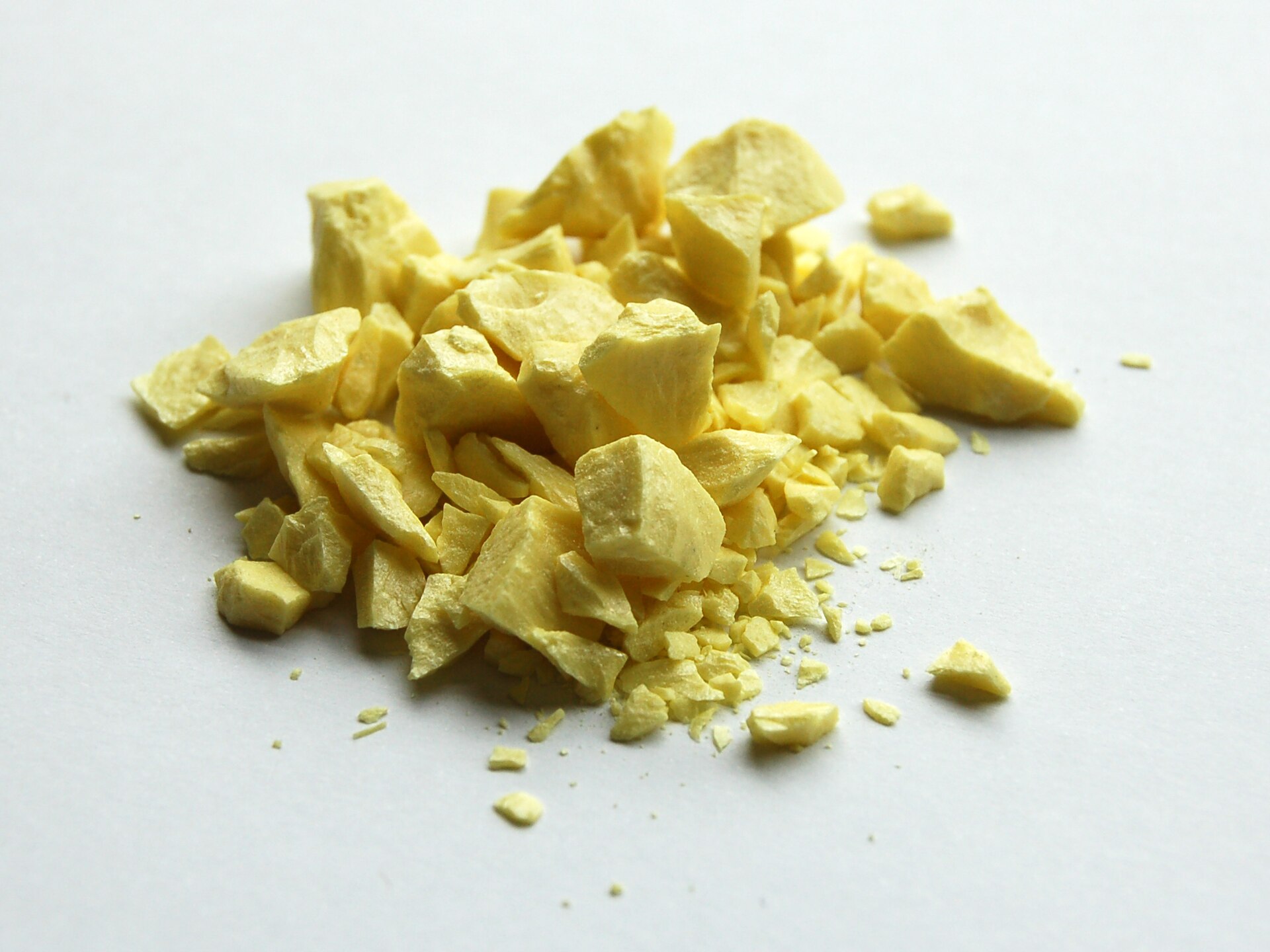
Sulfur prices have topped 1,000 dollars per metric ton in global spot markets, fundamentally reshaping phosphate fertilizer economics, according to University of Illinois agricultural economists at Farmdoc Daily.
Fertilizer Daily published the analysis on September 6, tracing the price surge directly to two supply shocks: ongoing Strait of Hormuz disruption and Russia's ban on sulfur exports.
Combined, those two disruptions have eliminated access to roughly two-thirds of globally traded sulfur, the same ratio open trade press has cited since mid-2026.
Because sulfuric acid is the primary reagent used to convert phosphate rock into plant-available phosphoric acid, DAP, and MAP, the cost surge feeds directly into phosphate fertilizer prices rather than staying isolated in refinery markets.
Farmdoc calculates that sulfur alone now accounts for a substantially higher share of DAP production costs than before the crisis.
The raw material cost increase explains much of the gap between current DAP prices above 820 dollars per metric ton and the 500 to 600 dollar range that prevailed in early 2025.
The analysis warns that 2027 U.S. farm budgets should anticipate phosphate fertilizer costs at or above current levels, with no near-term resolution to the sulfur supply shortage in sight.
Growers face a prolonged period of input cost pressure that may force further reductions in phosphate application rates, particularly for lower-margin crops.
Variable-rate application and soil-test-based nutrient management are cited as partial offsets, but do not eliminate the underlying cost problem when sulfur availability binds plant runs.
CRU and open reporting in mid-2026 described OCP and Mosaic curtailments when sulfur rationing became the binding constraint for phosphate majors, a dynamic Farmdoc now quantifies for U.S. crop budgets.
Alberta recovered sulfur still leaves mainly through the Vancouver stem while Canada remains the dominant U.S. import source for recovered sulfur per USGS tables.
Four-digit global spot sulfur validates continued Pacific export nominations even when Shengyishe's national Chinese benchmark oscillates in the 8,200 to 8,600 yuan band through early September.
Tampa molten at 705 dollars per long ton and Gulf solids above 1,100 dollars per tonne remain the two North American hub references against which Pacific granular competes.
Desk read: Farmdoc gives the farm-budget translation of a sulfur market that open press already priced above 1,000 dollars. The corridor read is unchanged: Alberta tonnes stay in demand on both the Pacific stem and the cross-border molten lane.