
The contrast between talk of negotiations and tightening pressure was visible around the Strait of Hormuz on September 15, where Washington and Tehran offered sharply different accounts of what happened to the Panama-flagged tanker EL GAIA.
The IRGC Navy said the tanker struck a naval mine while attempting to pass through what it called a restricted route south of the strait, causing an explosion and major fire.
It said the Strait of Hormuz remained closed and under its smart control.
US Central Command rejected that account, saying EL GAIA had been struck by an Iranian missile last month and rendered inoperable before Iran hit it again with a drone over the weekend while it sat off Oman.
CENTCOM said the vessel was being towed by a regional partner and called the IRGC account false.
Oman's Maritime Security Center said the tanker was being towed to port after catching fire following an earlier attack about 1.3 nautical miles northeast of Musandam governorate.
An Omani naval vessel evacuated 23 crew members and arranged medical care while searches continued for two missing people. The Omani statement did not identify an attacker.
The incident sits beside a Monday Hormuz commodity transit count of four vessels in preliminary Kpler data, down from 10 on Sunday.
Iranian state media and Fars also reported a separate tanker explosion after a mine collision in Hormuz on Monday without specifying timing, adding to the fog around what traffic is insured and what is not.
BC Insight and open freight accounts describe commercial sulfur shipments through Hormuz as near zero since the February conflict, with more than half of globally traded sulfur normally transiting the waterway.
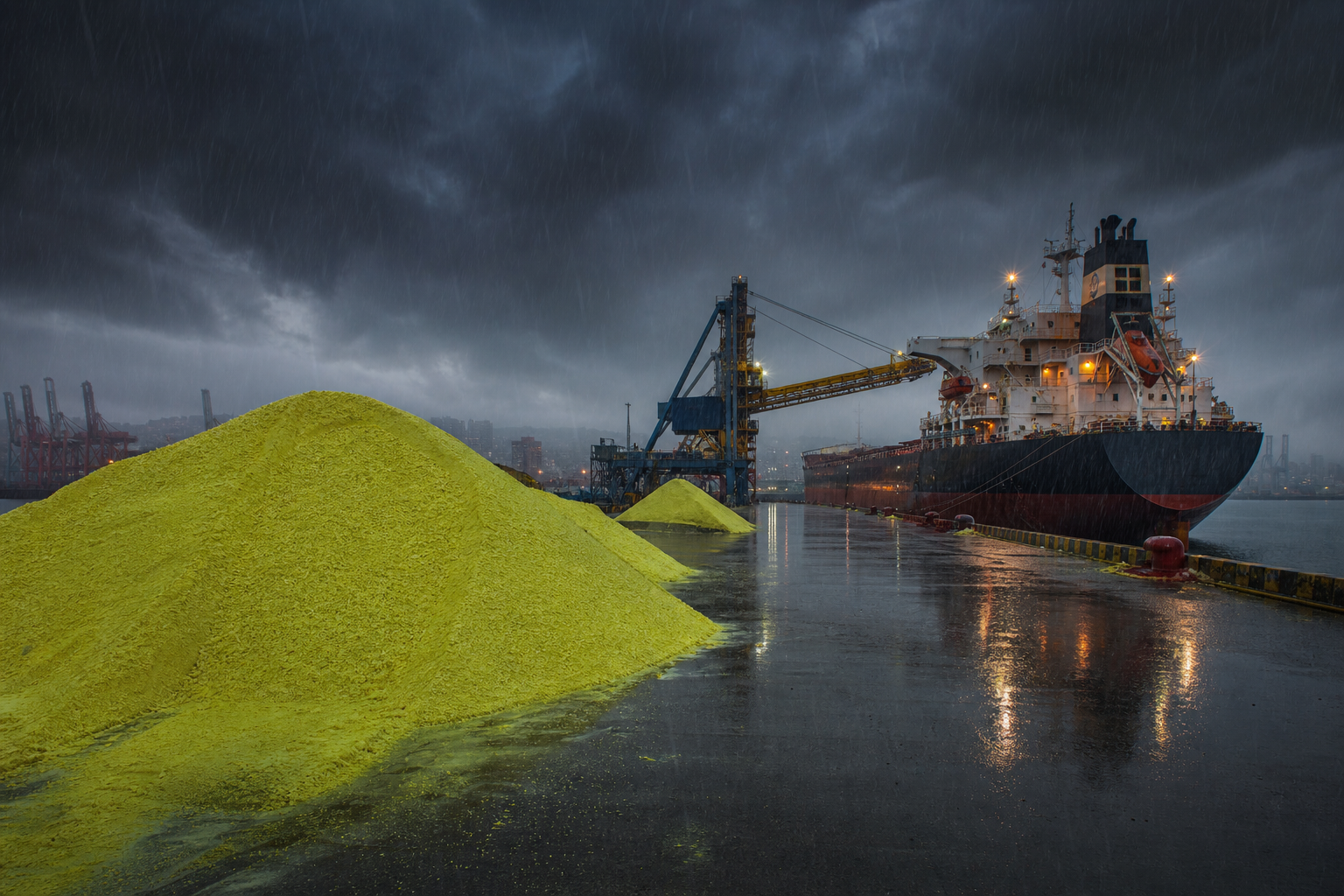
For Alberta recovered sulfur on the Vancouver stem, disputed tanker incidents reinforce why Pacific buyers still price insurance and routing risk into FOB Vancouver even when Chinese benchmarks correct.
Canadian export volumes rose in 2025 and early 2026 as Pacific terminals absorbed tonnes that would otherwise compete from Gulf load ports.
Desk read: September 15 is a maritime security dispute, not a sulfur price quote. The corridor read is unchanged: Alberta tonnes still leave mainly through Vancouver while Gulf seaborne stays impaired.