
Outlook · 2023-09-15
South Cheecham forming online and Canadian surplus logistics
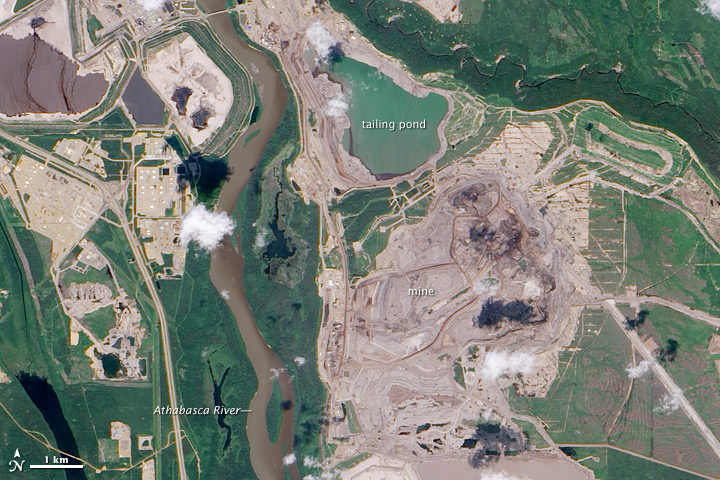
Keyera and Enbridge's South Cheecham sulphur facilities commenced operations at the beginning of the third quarter of 2023, adding Fort McMurray-area forming and rail loadout under long-term take-or-pay arrangements. Keyera's year-end report put gross project cost at about $285 million, Keyera net about $143 million, with roughly 4,400 tonnes a day of sulfur forming capacity near the oil-sands upgraders. The project addressed a structural Canadian issue: oil sands sulfur recovery near production, not only near Edmonton remelt hubs. About 4,400 tonnes a day is roughly 1.6 million tonnes a year if the plant runs every day. That is forming nameplate, not Claus recovery. It turns molten or remelted sulfur into granules that can rail west.
Argus had estimated the priller could increase Vancouver export capacity by 5 to 10 percent in 2023, subject to international demand. Commencement on 1 July means 2023 loadings include only a half-year of this capacity. Argus later said the priller was operational after January-May 2024 startup issues. Third-quarter 2023 is therefore the first tonnes, not full utilization. UNCERTAIN: exact incremental tonnes attributable solely to Cheecham in 2023 versus other forming sites. Heartland Sulphur's about 4,500 tonnes a day at the Industrial Heartland terminal remained the Edmonton-area remelt-and-form counterpart. Two nodes, one recovered stream.
USGS recorded Tampa at about $55 per long ton in mid-July, the same week Cheecham started. That is the softest Tampa print of 2023, after $90 at the open and $130 in mid-January. Starting a 4,400 tonne a day former into a $55 contract is a logistics investment, not a price-signal plant. Take-or-pay sulphur services underwrite midstream regardless of weekly FOB noise. Soft Vancouver FOB, heading toward Argus's $72 midpoint on 14 December, did not unbuild the terminal. It changed whether remelt tonnes used it. Current upgrader recovery still needed a form-and-rail door.
Alberta recovered sulfur still leaves mainly through the Vancouver stem. The Vancouver Fraser Port Authority later listed 3,103,912 tonnes of sulphur in 2023, up 11 percent, inside record dry-bulk and overall port trade of 150.4 million metric tonnes. BC Insight later summarized 2023 Canadian production near 4.5 million tonnes a year with about 2.6 million from oil sands upgrading and 1.7 million from sour gas, against domestic use near 0.6 million. Exports near 4.1 million included roughly 1.3 million tonnes molten south to the US and about 2.8 million via Vancouver, with a modest stock draw. Cheecham does not create molecules. It shortens the path from recovery to railcar. AER via Argus put January-October Alberta production at 3.78 million tonnes, up 11 percent. Those extra oil-sands tonnes are why a Fort McMurray former exists.
Canada's remelt behaviour, Argus and CRU said, accelerates when Vancouver FOB clears high logistics costs and slows when prices fall. Third-quarter 2023 is the slowdown after an early-year remelt-to-pace-exports window. Export-process costs often cited above $150 per tonne do not clear at $55 Tampa or at fading Pacific FOB. Kazakh crushed-lump sales after the Kashagan fine, and Saudi draws of about 0.15 million tonnes a quarter from storage, continued for regulatory and capacity reasons. Three inventory regimes, one surplus. USGS world production about 85.8 million tonnes, Canada about 4.98 million, US about 8.6 million unchanged, is the Claus planet.
China imported 8.8 million tonnes of sulfur in 2023, up 16 percent, IndexBox, Canada about 1.2 million tonnes, UAE and Korea about 1.1 million each. Gulf solids stayed competitive into Yangtze plants. Indonesian sulfur imports of about 2.7 million tonnes, acid imports near 1.1 million, and global nickel-related sulfur use of 3.5 million tonnes, are the metals book that treated HPAL as an offset to still-soft phosphate. IFA's MAP and DAP at 64.3 million tonnes, still below 2020, is that phosphate book. Cheecham's first tonnes sold into both. They did not need a $478 FOB to find a vessel. They needed forming, rail, and a loader.
US Gulf January-September production just over 6 million tonnes, Gulf Coast 3.57 million up 3 percent, Argus citing USGS, is the Atlantic length in the same quarter. Mosaic's weaker phosphate runs had freed Gulf sulfur for export. A North American map with a new Alberta former and a rising Gulf recovered stream is a surplus map. Tampa $55 is the Florida print of that map. Licensed weekly assessment grids are not restated here.
Alberta recovered sulfur still leaves mainly through the Vancouver stem. World surplus shows up there as stem utilization without a remelt boom. South Cheecham's third-quarter 2023 start is a landmark in Western Canadian sulfur logistics geography. Placing forming capacity near Fort McMurray reduced reliance on long molten hauls to Edmonton-area plants for every new oil-sands tonne. For Sulfur Wire's five-year corpus, this quarter is when the 2021-23 Vancouver ladder, 2.29 to 2.79 to 3.10 million tonnes, became a forming-and-rail story as well as a harbour story. That capacity would be called in 2025 when remelt economics flipped, and again in 2026 when Hormuz closed the Middle East door. A 13-day July 2023 strike had already shown that harbour labour, not only inland forming, can interrupt the stem. The 11 percent annual increase still printed. Third-quarter 2023 is therefore a logistics-resilience chapter as well as a Cheecham commissioning chapter, written at $55 Tampa and a fading Pacific FOB.
Key points
- Keyera AIF: South Cheecham sulphur facilities started early Q3 2023 (~4,400 t/d forming context in later disclosures).
- BC Insight: Canada ~4.5 Mt production 2023; ~4.1 Mt exported; modest stock draw.
- Vancouver ~2.8 Mt of Canadian solid export in that 2023 narrative; VFPA 3.10 Mt sulphur.
- Inland forming near oil sands reduces remelt lag for new recovery tonnes.
- UNCERTAIN: 2023 utilization rate of new Cheecham capacity.
30-day watchlist
- Any Keyera or trade-press note on Cheecham first-month run-rate.
- USGS fourth-quarter Tampa path off the $55/lt July trough.
- Argus or port monthly Vancouver loadings through September-October.
- Chinese monthly CIF versus the later full-year cheap import recovery.
Sources
- Canada's sulphur exports (BC Insight / CRU, May 2024)
- Keyera long-term sulphur services / facilities expansion context
- USGS Mineral Commodity Summaries 2024 - Sulfur
- Port of Vancouver 2023 cargo release
Public reference summary. Weekly PRA assessments require a commercial license. Not investment advice.
Public-source summary. Not investment advice. Unsubscribe from the email edition: reply UNSUBSCRIBE or email [email protected].