
Outlook · 2026-05-15
2026 price spike reporting and non-Middle East supply scramble
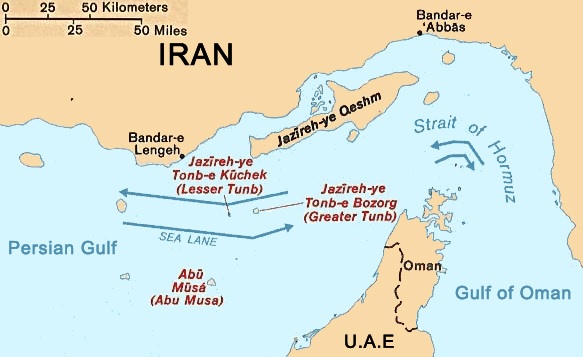
By mid-May 2026, open trade press described an extreme sulfur price episode tied to Middle East logistics stress and Strait of Hormuz risk. Shanghai Metals Market reported CIF Indonesia sulfur quotations jumping into roughly $1,100-1,250 per tonne, with some seller asks higher, and Chinese solid sulfur around 7,080-7,400 yuan per tonne. SMM also cited Canadian customs exports of 1.24 million tonnes in January-March 2026 and FOB Vancouver rising from about $492 per tonne early year toward $680-720 per tonne in that commentary. The 13 May analysis is at https://news.metal.com/newscontent/103899139-smm-analysis-after-sulfur-breaks-through-1200-how-far-is-the-ceiling. Licensed weekly assessment grids are not restated here.
Alternative routes discussed publicly included Central Asian rail into western China, Vancouver seaborne cargoes, and limited Middle East workarounds via Oman's Duqm and Saudi Red Sea ports. None of those routes replaces 45 percent of seaborne sulfur. BC Insight's 23 March Dire Straits note put about 45 percent of the roughly 39 million tonnes of sulfur transported internationally each year on a Hormuz transit. TFI's March conflict brief put high-risk Gulf exporters at about 41 percent of 2025 global sulfur exports, Iran adding about 4 percent, nearly 50 percent of trade tied to the Strait. US import reliance on conflict-exposed supply was estimated at 10-20 percent of domestic supply. Canada supplied 53 percent of US elemental sulfur imports in 2021-24 on the USGS MCS 2026 table.
Demand destruction signals also appeared. Chinese phosphate operating rates were reportedly cut. Indonesian HPAL acid costs were elevated. African copper consumers were resisting prices. SMM cited stranded loaded cargoes on the order of 0.8-1.0 million tonnes already loaded but unable to sail, and asked how far the ceiling was after sulfur broke through $1,200. UNCERTAIN in mid-May: Hormuz closure duration, those stranded cargo volumes, and whether India tender clearing levels would reset Asia CFR anchors. CRU's 22 May dependence table, published a week after this brief's date stamp, would put Indonesia at 76 percent Middle East sulfur in 2025, India at 84 percent, southern Africa at 93 percent. Paying up does not always clear if the cargo is not there.
Canada is the Pacific alternative SMM called unconstrained on water and constrained on rail and forming. First-quarter Canadian customs exports of 1.24 million tonnes are a 5 million tonne annualized pace if repeated, in line with the later H1 annualized 5.22 million tonnes. VFPA's 2025 sulphur total of 3,507,428 tonnes, published in the March 2023-2025 overview, is the port that has to load those tonnes. Destination mix in 2025 already showed China down 16 percent to 1.30 million tonnes and the United States up 191 percent to 302,000 tonnes. A 2026 Chinese bid that is cutting phosphate runs will not restore China's 2025 share. Indonesia and other Pacific metals buyers are the residual.
Alberta inventory is what price can summon. Argus, citing AER, put provincial stock at 11.66 million tonnes in July 2025, the lowest since May 2019. BC Insight's 23 March oil-sands note put oil sands at about 3.0 million tonnes, 63 percent of 4.7 million tonnes elemental output, with about 1.5 million tonnes of blocked sulfur to remelt across 2025-2030 as additional remelt capacity commissions by end-2026. Export chain cost often cited above $150 per tonne means the $492-to-$680-720 FOB Vancouver path SMM described is the difference between pouring block and loading vessels. Recovery still tracks bitumen and sour gas. USGS MCS 2026 put Canada at 5.0 million tonnes all-forms in 2025e and world output at 84 million tonnes, essentially unchanged from 2024. The 2026 crisis is logistics, not missing Claus plants.
China's own import dependence had been about 45 percent in SMM's 2025 frame, with 9.61 million tonnes imported. Mid-March customs halted MAP and DAP export declarations through August. A near-total sulfuric acid export halt from early May, after 4.65 million tonnes of acid exports in 2025, would remove the other sulfur-unit book. SunSirs would later put May elemental imports at 268,300 tonnes, down 66 percent. The mid-May price spike and the later volume collapse are the same market: CIF ideas that phosphate plants cannot afford, then plants that do not import.
Russia's export restrictions already compounded the dual-supplier shock before the 25 June decree extension to year-end. Kazakhstan still moved about 0.3 million tonnes a month through Russian ports until Roszheldor halted that rail on 26 May, eleven days after this brief. The mid-May scramble still treated Central Asian rail into western China as a possible workaround. By the end of June that workaround would be a closed door.
Alberta recovered sulfur still leaves mainly through the Vancouver stem. World supply shocks show up there as stem tightness, remelt draws, and a Gulf-versus-Pacific basis. Tampa molten had not yet printed $705 per long ton. The second-quarter $655, already a record versus 2008, was the last Florida settlement. Argus would later put the third-quarter contract at https://www.argusmedia.com/en/news-and-insights/latest-market-news/2851577-tampa-3q-liquid-sulphur-price-hits-record-705-lt. Mid-May is the Asian CIF spike. Florida is the lagging molten contract. Both are Hormuz translations.
Trade press shortfall estimates of 8-10 million tonnes a year of missing Gulf seaborne, if that order of magnitude holds, cannot be filled by Canadian remelt of 1.5 million tonnes over five years plus a few Red Sea workarounds. Affordability pushback in China phosphate, Indonesia HPAL, and southern Africa copper leaching is how the balance will actually clear. The ceiling SMM asked about is not a number. It is the run rate at which phosphate and metals plants stop bidding.
Key points
- SMM (13 May 2026): CIF Indonesia sulfur weekly quote moved into ~$1,100-1,250/mt range in that report.
- SMM: China imports 9.61 Mt in 2025 with ~45% import dependence; Middle East historically large share of that import mix.
- Vancouver framed as unconstrained Pacific alternative; Q1 2026 Canadian export pace cited at 1.24 Mt (SMM / customs).
- Affordability pushback noted in China phosphate, Indonesia HPAL, and southern Africa copper leaching.
- UNCERTAIN: timeline for Gulf shipping normalization and how much alternative origin capacity can fill an 8-10 Mt/yr shortfall estimate in trade press.
30-day watchlist
- India tender clearing levels as a possible Asia CFR reset.
- Confirmation of stranded Gulf cargo volumes versus SMM's 0.8-1.0 Mt order of magnitude.
- May Chinese import print and phosphate operating rates.
- Any AER-linked 2026 Alberta inventory confirmation.
Sources
- After Sulfur Breaks Through $1,200 (SMM Analysis)
- The sulphur market in deficit (BC Insight / CRU)
- Canadian sulphur supply shift (GMC Trading Group)
- Fertilizer and the Middle East Conflict (TFI, Mar 2026)
Public reference summary. Weekly PRA assessments require a commercial license. Not investment advice.
Public-source summary. Not investment advice. Unsubscribe from the email edition: reply UNSUBSCRIBE or email [email protected].