
Outlook · 2026-06-20
China import demand and freight costs reshape H1 2026 delivered economics
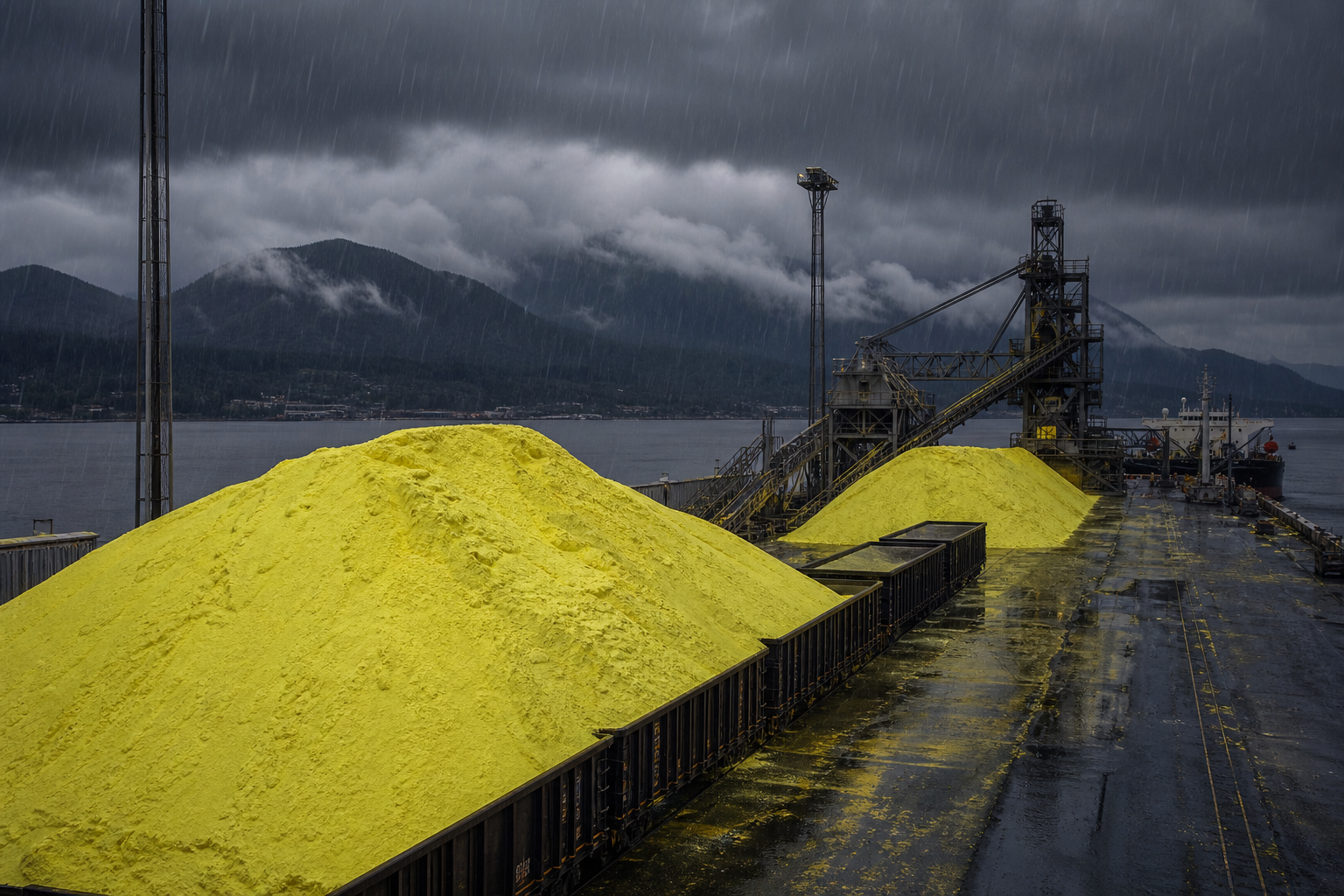
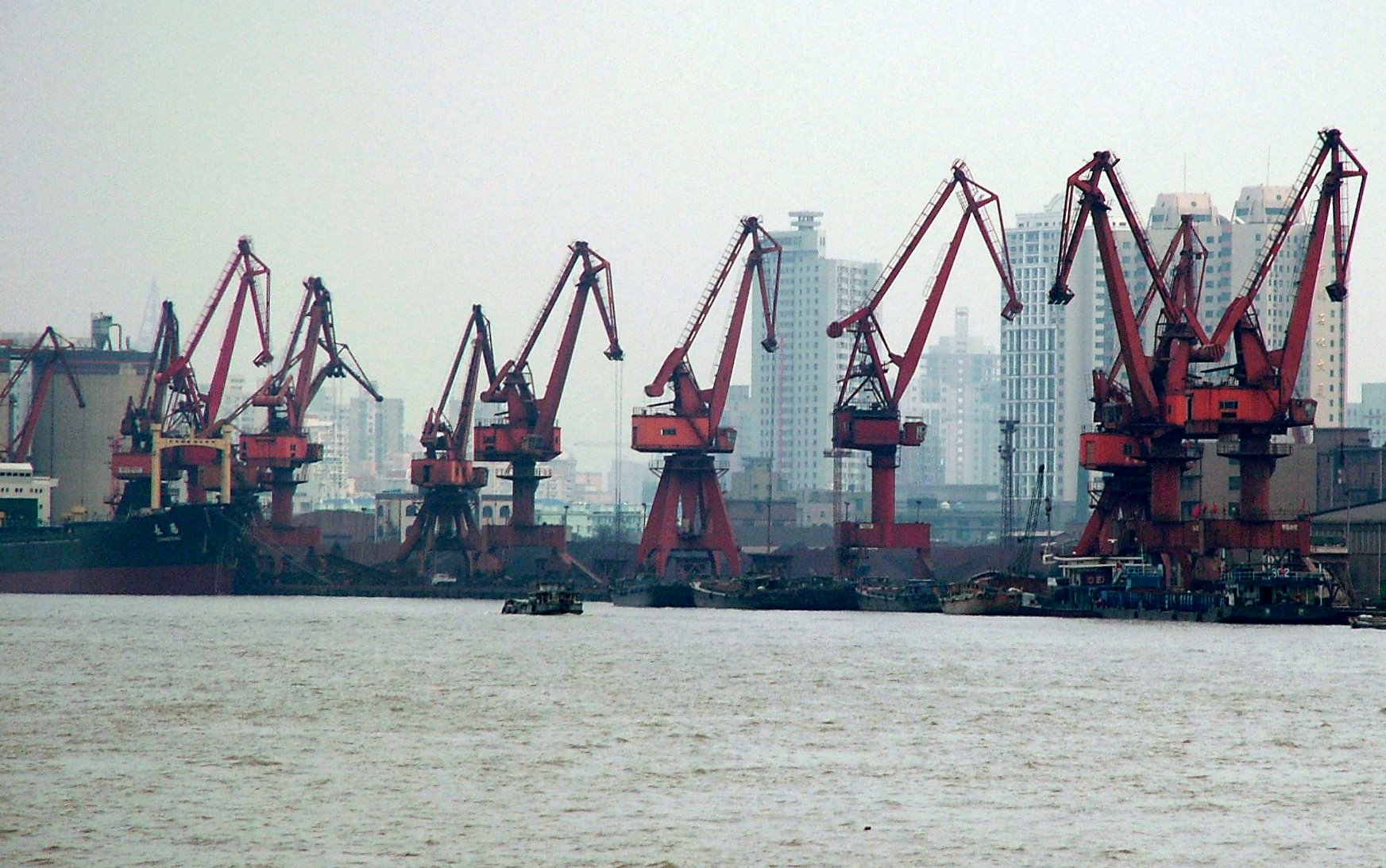
A June 2026 open market report summarized first-half sulfur benchmarks moving sharply higher: FOB Middle East from about $525 per tonne in February toward about $900 per tonne in June; CFR China from about $547 per tonne toward about $1,075 per tonne; Chinese ex-works from about 4,155 yuan per tonne toward about 9,500 yuan per tonne. The same report tabulated Middle East-China freight rising from roughly $26-27 per tonne in February to $161-170 per tonne in June, with similar multi-fold increases on Middle East-India and Middle East-Brazil lanes. Freight became a first-order component of delivered cost, not a residual add-on. Licensed weekly assessment grids are not restated here.
China remained the pivotal importer in that narrative, continuing some purchases despite higher delivered costs and reinforcing global price sentiment. The customs tape later showed that pivot as a collapse, not a boom. SunSirs put May imports at 268,300 tonnes, down 66.41 percent year on year, the second-lowest monthly volume in nearly 20 years, average import price about $798.96 per tonne. Cumulative January-May was 2.1154 million tonnes, down 51.44 percent. Phosphate fertilizer utilization was reported toward about 40 percent for MAP and about 30 percent for DAP as sulfur costs soared as a share of production cost. SMM's later first-half customs review put January-June at about 2.26 million tonnes, down 57.7 percent from about 5.34 million, with June at about 0.147 million tonnes, a multi-year low.
Origin mix inside those remaining tonnes shifted. Gulf-4 share of China's import mix roughly halved, from about 35 percent to about 20 percent, while South Korea, Oman, and Canada rose to a combined about 58 percent. Oman is a Red Sea and Arabian Sea workaround, consistent with mid-May discussion of Duqm and Saudi Red Sea ports as limited Middle East alternatives. South Korea is a refining origin. Canada is the Pacific recovered-sulfur origin. None of those three is a Hormuz loader. Full-year 2025 Chinese imports had been about 9.61 million tonnes. 2026 is not that year.
Mid-March Chinese customs stopped accepting export declarations for mainstream MAP, DAP, and related phosphates through August, implementing a December industry consensus. Yuntianhua, Xingfa, and Xinyangfeng halted outbound phosphate fertilizer shipments. Non-fertilizer phosphorus chemicals, purified phosphoric acid and iron phosphate among them, were described as outside the fertilizer suspension. A near-total sulfuric acid export halt from early May, after 4.65 million tonnes of acid exports in 2025, up 73 percent year on year, took the other sulfur-unit book off the water. First-half 2026 acid exports fell to about 0.78 million tonnes, down 64 percent, with June collapsing to about 980 tonnes.
Fertilizer phosphate chains stayed the primary demand story. Metals and HPAL were an additional pull in broader 2025-26 industry commentary. BC Insight's 22 May note put 2025 Middle East dependence at 76 percent for Indonesia, 84 percent for India, and 93 percent for southern Africa. When Hormuz flows impair, those buyers cannot always solve shortages by paying up because cargo availability itself is rationed. Nickel Industries would start the ENC sulfuric acid plant in Sulawesi in the final week of June, a rigid autoclave bid. Southern African copper leaching, 93 percent Gulf-dependent, had less Pacific optionality.
Alberta recovered sulfur still leaves mainly through the Vancouver stem. VFPA's 2025 sulphur total of 3,507,428 tonnes, with China at 1.30 million tonnes down 16 percent, is last year's stem. SMM put 2025 Canadian sulfur exports at 4.25 million tonnes, up 40.7 percent, and first-four-month 2026 on a 5.22 million tonne annualized pace, Alberta and British Columbia more than 95 percent of the account. FOB Vancouver in that review rose from about $500 per tonne in January toward $825-950 by April. A Chinese import collapse of more than 50 percent is the largest demand print on that stem in 2026. Destination diversification toward Indonesia and the United States is how the stem later cleared tonnes China did not take.
CIS logistics tightened through May and June. Roszheldor halted Kazakh sulfur rail to Russian ports from 26 May, about 0.3 million tonnes a month. Decree No. 785 on 25 June extended Russia's industrial sulfur export ban to 31 December 2026. Kazakhstan Order No. 1363 fully suspended sulfur exports from 27 June. Those closures remove the Baltic and Black Sea option for Morocco and Brazil. OCP's second-quarter cuts of up to 50 percent, reported in July, are the demand response already forming in this June freight file.
Tampa molten had not yet printed the third-quarter $705 per long ton. The second-quarter $655 per long ton, already above 2008, was the last Florida settlement. Argus would put the third-quarter record at https://www.argusmedia.com/en/news-and-insights/latest-market-news/2851577-tampa-3q-liquid-sulphur-price-hits-record-705-lt. US Gulf solids would print $1,100-1,150 per tonne FOB in that same July item. The June freight table is the delivered-cost explanation of those later FOB and CFR prints. War-risk and vessel diversion premiums, not a new Claus industry, moved the spread between FOB Middle East and CFR China from about $22 per tonne in February to about $175 in June on that open table.
UNCERTAIN: how much of the reported freight and CFR path reflects temporary war-risk and vessel diversion premiums versus a durable new freight regime once Gulf shipping normalizes. Second-half mean reversion in freight if maritime security risk eases, and China autumn fertilizer restock timing, are the two dated questions. Until customs months return toward 0.80 million tonnes, the desk will treat China as a mix-shift destination, not a volume destination, for Vancouver.
Key points
- Open H1 2026 table: FOB ME ~$525→~$900/t; CFR China ~$547→~$1,075/t (Feb→Jun).
- ME-China freight in same report: ~$26-27/t (Feb) to ~$161-170/t (Jun).
- China ex-works sulfur cited from ~4,155 to ~9,500 CNY/t over the same window.
- Freight became a first-order component of CFR, not a residual add-on, in H1 commentary.
- UNCERTAIN: second-half mean reversion in freight if maritime security risk eases; China autumn fertilizer restock timing.
30-day watchlist
- June and July Chinese sulfur import prints versus the May 268,300 t low.
- Any documented return of Chinese sulfuric acid exports after the May halt.
- Vancouver destination mix if China stays thin and Indonesia/US take share.
- Gulf-to-China and Gulf-to-India freight if de-escalation headlines appear.
Sources
- 2026 Sulphur Price Analysis: Trends, Freight Costs & Trade Outlook (call2supply)
- USGS Mineral Commodity Summaries 2026 . Sulfur (China world production context)
- China May sulfur imports (SunSirs)
- SMM H1 China sulphur customs
Public reference summary. Weekly PRA assessments require a commercial license. Not investment advice.
Public-source summary. Not investment advice. Unsubscribe from the email edition: reply UNSUBSCRIBE or email [email protected].