
Sulfur Wire North American sulfur intelligence

Outlook · 2026-06-15

Freight and CFR dislocation reshape H1 2026 delivered economics
Formed sulfur piled at a Pacific bulk terminal under a dark sky
Formed sulfur at a Pacific bulk terminal, the visual of Alberta tonnes waiting on the Vancouver stem. Sulfur Wire · Original
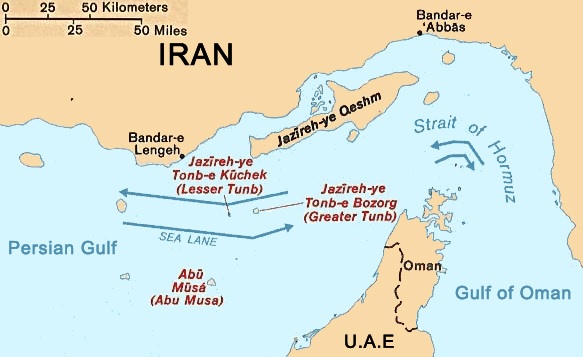
Strait of Hormuz. More than half of seaborne sulfur normally transits this lane.

Second-quarter 2026 saw freight become a first-order price component. An open first-half 2026 market table showed FOB Middle East rising from about $525 per tonne in February toward about $900 per tonne in June, CFR China from about $547 per tonne toward about $1,075 per tonne, and Middle East-China freight from roughly $26-27 per tonne to $161-170 per tonne. SMM described CIF Indonesia quotations into roughly $1,100-1,250 per tonne by mid-May. Licensed weekly assessment grids are not restated here.

Phosphate producers faced margin compression. SSY and CRU commentary noted production cuts, including OCP's reported second-quarter response that July's update would put at up to 50 percent of Moroccan capacity. Alternative origins included Vancouver, limited Red Sea workarounds, and Central Asian rail into western China. Those alternatives could not fully replace Gulf seaborne share. About 45 percent of the roughly 39 million tonnes of sulfur transported internationally each year must traverse Hormuz, on BC Insight's 23 March count. TFI's March brief put high-risk Gulf exporters at about 41 percent of 2025 global sulfur exports, Iran adding about 4 percent, nearly 50 percent of trade tied to the Strait.

Canada is the unconstrained Pacific origin in that substitution set, constrained in practice by rail, forming, and remelt. SMM put 2025 Canadian sulfur exports at 4.25 million tonnes, up 40.7 percent, first-four-month 2026 annualized near 5.22 million tonnes, Alberta and British Columbia more than 95 percent of the account. FOB Vancouver rose from about $500 per tonne in January toward $825-950 by April in that review, and from about $492 toward $680-720 in SMM's May recounting of the first quarter. VFPA's 2025 sulphur total of 3,507,428 tonnes is the port confirmation. Argus, citing AER, put Alberta inventory at 11.66 million tonnes in July 2025, the lowest since May 2019. BC Insight expected about 1.5 million tonnes of blocked Canadian sulfur remelted across 2025-2030.

CIS relief valves closed during the quarter. Roszheldor halted Kazakh sulfur rail to Russian ports from 26 May, about 0.3 million tonnes a month. Decree No. 785 on 25 June extended Russia's industrial sulfur export ban to 31 December 2026. Kazakhstan Order No. 1363 fully suspended sulfur exports from 27 June. Tengiz-area recovered tonnes that had reached Morocco and Brazil through Baltic and Black Sea gateways stopped being a seaborne option. The dual-supplier shock TFI later named, Hormuz plus Russia, is already a triple shock if Kazakhstan is counted.

China's bid stepped down as freight stepped up. SunSirs put May imports at 268,300 tonnes, down 66 percent, MAP toward 40 percent utilization, DAP toward 30 percent. Mid-March customs halted MAP and DAP export declarations through August. The May acid-export halt, after 4.65 million tonnes of sulfuric acid exports in 2025, removed seaborne acid for metals and fertilizer consumers in Asia. June acid exports would later print near 980 tonnes. A country that neither imports sulfur at 2025 rates nor exports acid is not a 9.61 million tonne destination in 2026.

Indonesia, India, and southern Africa cannot treat that Chinese step-down as their solution. CRU's 22 May dependence table put them at 76, 84, and 93 percent Middle East sulfur in 2025. Paying up does not always win if the vessel is not there. Nickel Industries' late-June ENC acid-plant startup in Sulawesi adds a non-phosphate Indonesian bid on the scarce side of that rationing. Ecopetrol's Cartagena 1,000 tonne a day pelletiser, commissioned in June, is a small Atlantic origin aimed at Brazil, Peru, and Africa, not a replacement for a 1 million tonne a month Gulf hole.

Alberta recovered sulfur still leaves mainly through the Vancouver stem. World supply shocks show up there as stem tightness, remelt draws, and a Gulf-versus-Pacific basis. Early-June rainfall that held Lac la Biche-area wildfires near Cenovus, CNRL, and ConocoPhillips in-situ sites was a production-risk print on the 3 million tonne a year oil-sands sulfur capacity belt. The plants kept running. Remelt remained a price decision, not an emergency draw.

Tampa molten for the third quarter had not yet settled. The second-quarter $655 per long ton, already above 2008, was the last Florida number. Argus would put the third-quarter record at $705 per long ton delivered on 13 July (https://www.argusmedia.com/en/news-and-insights/latest-market-news/2851577-tampa-3q-liquid-sulphur-price-hits-record-705-lt) and US Gulf solids at $1,100-1,150 FOB. The 15 June freight file is why those later prints were possible. War-risk premium versus lasting vessel scarcity after transit resumes remains the UNCERTAIN. Demand destruction in phosphate and some metals leaching is already the clearing mechanism.

Public reference hubs on this desk, open-news and industry_estimate anchors only, showed FOB Vancouver granular mid about $1,045 per tonne as of 1 June 2026 against FOB US Gulf granular mid about $1,125 per tonne as of 1 July, a Pacific discount of about $80 per tonne on those prints. That basis is a freight and destination story as much as an origin story. Vancouver-to-China and Vancouver-to-Indonesia voyages stayed outside the $161-170 per tonne Middle East-China war-risk band. Formed Alberta tonnes that can load at Vancouver therefore still cleared into Indonesia even as Chinese phosphate runs were cut. US Gulf solids that can load dry bulk cleared into North Africa and East Africa, the unusual second-quarter destinations Argus would name in July.

USGS Mineral Commodity Summaries 2026 remains the production frame: US all-forms 8.1 million tonnes in 2025e, elemental recovered 7.6 million, world 84 million, Canada 5.0 million. Net import reliance 14 percent. Canada 53 percent of US elemental imports for 2021-24. Those government lines have not changed since February. What changed in the second quarter is the lane. A 84 million tonne world that cannot move 45 percent of its seaborne book through Hormuz is a different market from a 84 million tonne world that can. Alberta forming plants will not raise Claus output because sulfur is expensive. They will remelt, rail, and load while FOB covers the chain.

Key points

  • Open H1 table: ME-China freight ~$26-27/t (Feb) to ~$161-170/t (Jun).
  • CFR China ~$547→~$1,075/t; FOB ME ~$525→~$900/t in same report.
  • SMM mid-May: CIF Indonesia ~$1,100-1,250/mt range in that commentary.
  • Demand destruction signals in phosphate and some metals leaching.
  • UNCERTAIN: H2 mean reversion in Gulf freight if security risk eases.

30-day watchlist

  • Tampa Q3 molten settlement and Gulf solid-export fixtures.
  • Chinese June import print versus May's 268,300 t.
  • Any Gulf loading recovery versus CRU's later 1 Mt/month restoration view.
  • Vancouver destination mix if China stays thin.

Sources


Public reference summary. Weekly PRA assessments require a commercial license. Not investment advice.

Alberta sulfur inventory, year-end prints Mt 2021 12 2022 12 2023 12 2024 12 2025 12 AER ST3 closing inventory (verified_public)
Alberta sulfur inventory, year-end prints AER ST3 closing inventory (verified_public)

Public-source summary. Not investment advice. Unsubscribe from the email edition: reply UNSUBSCRIBE or email [email protected].

2026-05-15Outlook stream2026-06-20